Project Update
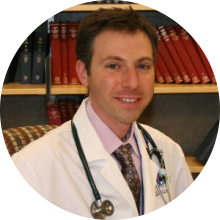
Joshua Schiffman answered questions about his research (September 2014):
What attracted you to this field/topic initially?
I have always wondered which children were going to develop cancer, and why. These questions came from seeing countless children diagnosed with cancer as a young doctor and always being asked by parents why this was happening to their son or daughter. We never had a good answer for these parents, and sometimes even the children, too. After completing my fellowship training in pediatric hematology-oncology, I became even more determined to try to answer this question. I focused on trying to take what we learned about cancer risk through epidemiology and trying to test these findings in the laboratory, all with the goal of one day preventing or detecting cancer early in children and adolescents. I wanted to answer the question of where does cancer come from, and be able to do something about it.
How do epidemiological studies differ from lab bench studies?
Epidemiological studies often focus on large populations of patients and controls to find statistical associations that help to explain cancer risk. It is often a population-based science. On the other hand, lab bench studies often focus on a specific set of experiments with a relatively small number of cells or molecules to determine the cause-and-effect of biological phenomena. What I enjoy most is the combination of both fields in the study of “genetic epidemiology,” and trying to understand how to translate these findings directly back to the patients and their families at risk for cancer.
In simple terms, what has your research found to date?
Over the past year, we have continued to find correlations in the Utah Population Database (UPDB) between different childhood cancers and risk for familial diseases.
What obstacles/challenges do you face in translating your research into improved outcomes for children with cancer?
Childhood cancer is by its very nature a rare disease. Hereditary cancer syndromes are even rarer, so this makes it challenging to identify enough families to validate our findings and enroll them in a large enough study to demonstrate the efficacy of an early prevention or early tumor detection strategy.
What has this grant from ALSF allowed you to do that you wouldn’t be able to do otherwise and what does this mean for children with cancer and their families?
This grant has allowed us to explore the UPDB at a depth not otherwise possible to identify familial relationships in childhood cancer. With the encouragement of ALSF, we will continue to try to understand both the hereditary and genetic basis for childhood cancer. We will use this information to propose and test novel early prevention and cancer detection strategies in those children and families at great risk for childhood cancer. ALSF has provided key support for all of the work we do in our translational laboratory to try to understand which children develop cancer, and why, and now, most importantly, what we can try to do about it.
2013 Research Update – As Seen in ALSF's August E-Newsletter:
Will my other kids get cancer?
It's a common question that Joshua Schiffman, MD, hears when a parent learns that their child is diagnosed with cancer, but one, up until now - that he didn't have an answer for. Despite family history being a well-established risk factor in adult cancers, it is rather understudied in childhood cancers. Thanks to research funded in part by ALSF, Dr. Schiffman and his team have found that there is an increased risk for close family members of developing childhood cancer.
Dr. Schiffman examined data in the Utah Population Database, a resource that links genealogies and cancer registry data from Utah to medical records and vital records. He found that when children were diagnosed with any kind of cancer at age 18 or younger, the risk to their siblings or children for childhood cancer doubled compared to families with no childhood cancer patients. If the child was diagnosed with cancer at age 4 or younger, the risk to close relatives for childhood cancer increased almost four times. Most of this increased risk to close relatives was found in those families who already had a strong family history of cancer.
This may seem alarming, but Dr. Schiffman urges families to use this information under cautious advisement. He notes that it simply places a stronger focus on ensuring that family history is collected and routinely updated for all pediatric cancer patients - even after they have completed treatment. Ensuring a family history is part of routine care can help clinicians refer appropriate patients for genetic evaluation. If a specific genetic risk factor is found, then at risk family members can undergo early tumor surveillance and ideally, improved outcomes.
"It’s important to highlight that the absolute risk for family members is still very, very low! This study provides further evidence that origins of pediatric cancer may have a strong genetic component, given the increased familial risk, and this can provide hope for novel treatment and prevention strategies." - Joshua Schiffman, MD