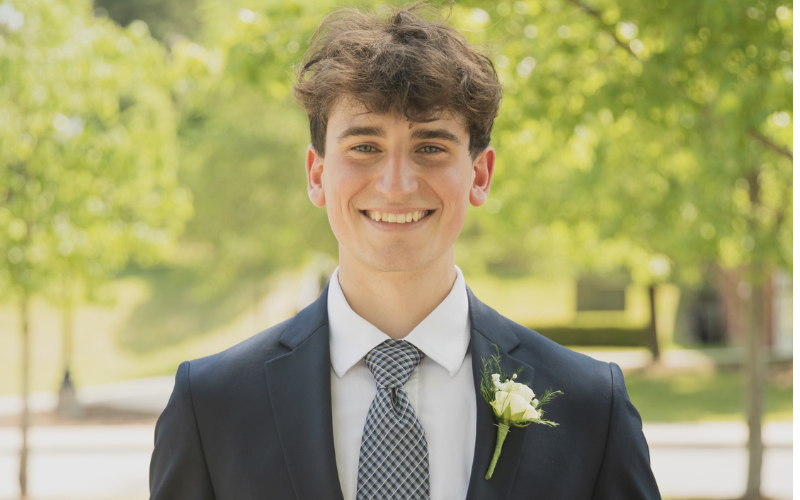
By: Logan Mansfield, Neuroblastoma Survivor and POST Grantee
I was born the same year that Alex Scott passed away. Like Alex, I too was diagnosed with neuroblastoma as a young child. I am here not only as a survivor, but as someone who feels the weight and urgency of what childhood cancer awareness really means.
Little did I know that my own experiences with neuroblastoma – going through multiple surgeries and even having my life upturned last fall when I was taken into an emergency surgery – would bring me face-to-face with my purpose. My past pointed me in the direction of my life in oncology research.
As an Alex’s Lemonade Stand Foundation Pediatric Oncology Student Training (POST) grant recipient, I often meet pediatric patients who have gone through rounds of chemotherapy treatment, radiation, and surgery. These families give everything for their child’s health, spending countless hours looking for the best institutions and hospitals for treatment. Some donate their own money to fund more cancer research and rally behind fundraisers even when their child is gone.
In the research community, we take pride in the fact that we are entrusted with the responsibility to utilize these funds to develop groundbreaking treatments – allowing us to be part of transforming so many lives.
Last fall, I had to become a patient again due to complications from a long-term side effect of my cancer treatment. I spent countless hours staring at a clock, waiting for the time to tick by. It was incredibly difficult to be back, and this was my eighth abdominal procedure. I experienced recurrent pricks, blood draws, central lines, and the lovely right on-the-dot 6 AM rounds by the general surgery team. My IV pole became my best friend. Wherever I went, it followed me throughout the hospital.
What made the difference in my recovery and learning to cope with my new lifestyle was devoting my life to changing the trajectory for those fighting the same battles. I became even more a part of our amazing childhood cancer community and am excited every single day to enter the lab and create change.
All of us who have beaten this disease, or who are still fighting, owe it to ourselves to come together and fight every day to amplify our voices. We are a select special few that, spur of the moment, can fundraise like no one else. I have a saying in my notes that reads, “Of those that survive, let it be known that those who perished, still have thrived.”
Childhood cancer awareness makes us a family – always fighting for each other, no matter the difficulties or struggles that we may face along the way. We build each other up and work as a team to push our family further along. No matter what, we never give up. That is what childhood cancer awareness is all about.
About Logan
Logan is a survivor of stage IVS neuroblastoma. Though he underwent cancer treatment as an infant and rung the bell to celebrate his remission many years ago, Logan’s experience with childhood cancer continues to impact his life and influence his academic career. In 2025, Logan was awarded a POST grant to conduct research on the effects of a specific chemo-sensitizing agent on rhabdomyosarcoma cell chromatin packing characteristics. With the mentorship of Dr. Kyle MacQuarrie, their team at Ann & Robert H. Lurie Children’s Hospital of Chicago is working to better understand chemotherapy resistance in kids with rhabdomyosarcoma to hopefully one day improve survival rates.
About Childhood Cancer
In 2024, an estimated 15,000 children were diagnosed with cancer in the United States. While cancer names and types like leukemia or lymphoma may share a name with adult cancers, childhood cancers are different and often require different treatments. The average age at diagnosis for a child with cancer is 10 years old (for an adult it is 66 years old). Children who have had treatment and survive childhood cancer are 95% more likely than their peers without a past cancer diagnosis to experience a significant health side effect by the time they are 45 years old. Learn more about childhood cancer and the work Alex’s Lemonade Stand Foundation is doing to make a difference here.