Discovery of New Targets and Pathways for T-ALL Therapy
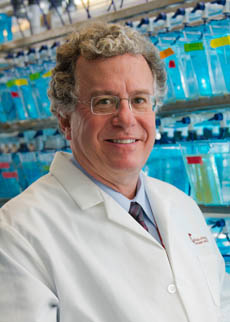 For Thomas Look, MD, vice chair for research in the Department of Pediatric Oncology at Dana-Farber Cancer Institute, a Bridge Grant from the Alex’s Lemonade Stand Foundation was critical to his research into the genetic pathways drive T-cell acute lymphoblastic leukemia (T-ALL). The goal of the project is to identify genes and proteins that can serve as targets for more-effective, less-toxic therapies for this disease, which accounts for 10-15 percent of all cases of childhood ALL.
The intensification of therapy for children with T-cell acute lymphoblastic leukemia (T-ALL) has improved clinical outcomes substantially, but first-line therapy continues to fail in approximately 25% of children, and after initial failure these patients have a very poor prognosis. Our long term goal is to improve the targeted therapy of the high risk subset of T-ALL patients. The central hypothesis underlying this proposal is that treatment resistance in high-risk T-ALL patients is mediated by innate resistance to undergo cell death, due in a significant fraction of patients to PTEN loss contributing to PI3K activation. The primary objective is to establish the level of innate resistance to cell death in primary T-ALL cells from high risk cases and to reduce the level of these cell survival signals and induce death of these cells. The successful completion of these studies will revolutionize therapy for the ABD subset of children with high-risk T-ALL, which accounts for 62% of induction failures as well as 19% of relapses in pediatric T-ALL.