Center of Excellence in Childhood Cancer Drug Development and Clinical Pharmacology at CHOP
Developing new therapies for infants, children, adolescents and young adults with cancer requires a well-trained, dedicated multidisciplinary team. Physicians and scientists at The Children's Hospital of Philadelphia Division of Oncology and Center for Childhood Cancer Research are collaborating to develop new therapies for cancer. We are dedicated to improving our understanding of the biology and genomics of childhood cancer, developing better preclinical models, evaluating new drugs, and improving the efficiency and conduct of clinical trials.
Our research focuses on clinical pharmacology, genomics, cancer biology, immunotherapy, pharmacogenomics, epidemiology and clinical trial design, making our program ideally suited to train physician-scientists. We can rapidly advance innovative therapies from target discovery and preclinical development including companion diagnostics, clinical pharmacology and clinical trials for children with cancer.
Our proposed Alex's Lemonade Stand Center of Excellence will benefit from the discovery and development of novel therapeutic strategies from within our program, rather than relying on adapting the discoveries of others to new clinical trials. This provides an optimal environment for the creation and development of new therapies and novel biomarkers of response and toxicity. Through the ALSF Center of Excellence we will provide physician-scientists training and research infrastructure to meet the current challenges of drug development and to pioneer future therapeutic innovations to promptly bring the most promising new therapies to children.
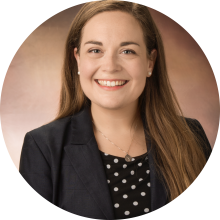
2016-2017 COE Scholar – Tamara Miller, MD
Dr. Miller’s research aims to develop a new system of capturing adverse events during chemotherapy using electronic medical record (EMR) data. Currently adverse events are determined through time-consuming manual review of the medical record and her prior work has shown that this method leads to under-reporting of adverse events. The goal of her research is to develop algorithms that capture adverse events automatically using EMR data without manual medical record review in order to improve the accuracy and efficiency of this process. This will lead to improved understanding of true toxicities of therapy that can be used to accurately assess the safety of new agents. During the award period Dr. Miller will gain research skills in: 1) using EMR data for clinical research, 2) Obtaining training in clinical informatics, 3) obtaining training in developmental therapeutics, 4) Developing expertise in clinical trial design
Developmental Therapeutics Scholar Spotlight

Ami Desai, MD
Dr. Desai is a COE Scholar who is receiving advanced training in translational research and drug development to help bring new treatments for childhood cancer to patients.
"The COE Scholar grant has been integral to my career development. Through the generous support of this grant, I have been able to investigate various aspects of drug development including early phase trial design and implementation, clinical pharmacology, biomarkers of therapy response, and drug toxicities. Having a well-developed educational and training plan that complements my research efforts has helped set the foundation for my endeavors in clinical/translational research."
What attracted you to pediatric cancer research and developmental therapeutics in particular?
While there have been significant advances in the pediatric cancer research, there are still many areas left to explore and questions to be answered. When a patient has a suboptimal response to therapy or relapses, I am reminded that we need more effective treatments for many childhood cancers. At the same time, when a patient is in remission yet suffers from therapy-related toxicities, I recognize the importance of optimizing the treatments we provide. These clinical experiences have steered my interest in bringing forward novel therapies to provide more effective and less toxic treatment regimens for childhood cancers.
Describe your role as a Developmental Therapeutics Scholar. How are you being trained? What are your long term professional goals?
As a Developmental Therapeutics Scholar, I have gained direct exposure to phase 1 and 2 trial design, regulatory aspects and implementation of clinical trials, and analysis of pharmacokinetic data. I am fortunate to have the mentorship of Dr. Elizabeth Fox and Dr. Frank Balis, as well as an individualized training plan aimed at enhancing my knowledgebase in the current treatments and biology of selected childhood cancers, clinical pharmacology, biomarker exploration and validation, and clinical trial design through workshops and courses. I have attended the Markers in Cancer Diagnostic Development Tutorial and Accelerating Anticancer Agent Development and Validation Workshop. I have completed the Master of Science in Clinical Epidemiology (MSCE) degree program at the Perelman School of Medicine at the University of Pennsylvania, with a focus in pharmacoepidemiology, and have the opportunity to take additional courses at the University of Pennsylvania.
With my mentorship and training, I hope to be in the forefront of developmental therapeutics for solid tumors. I plan to take the skills I have developed to investigate new drugs for childhood cancer and optimize their use by incorporating pharmacological principles into the design and analysis of early phase and pilot clinical trials. My long-term focus is also on the discovery of biomarkers of drug toxicity and disease outcome, which are critical to improving the efficiency of drug development in childhood cancer. Currently, I am investigating markers of therapy response and disease burden for neuroblastoma and osteosarcoma.
What therapy (in simple terms) are you working on? Has anything surprised you about your research? Has effectiveness been achieved for any of the therapeutics studied by the COE? What does this mean for children with cancer and their families?
I am currently working on a phase 1 study of a small molecule inhibitor for relapsed and refractory solid tumors and brain tumors, which will be conducted at the four ALSF Centers of Excellence. Pre-clinical work by Dr. Brodeur at CHOP indicates that this therapy targets specific pathways in neuroblastoma. We hope this agent will help provide additional therapeutic options for children with cancer. My experience in developing and writing this trial has highlighted the critical importance of sound trial design and taking account the unique aspects of pediatric early phase trials.
What obstacles/challenges do you face in bringing new treatments to children with cancer?
The time required to develop a new agent from dose finding studies (phase 1) through efficacy trials (phase 3) in childhood cancer can span decades. To accelerate the clinical development of promising new agents and improve the outcome for children with cancer, we must shorten the timeline required to perform clinical trials by developing short term, non-invasive surrogate endpoints that serve as early indicators of therapy response and survival. While this is a challenging task, it is important to drug development.
What has this grant from ALSF allowed you to do that you wouldn’t have been able to do otherwise?
The COE scholar grant from ALSF has provided the support, infrastructure, and training necessary for me to pursue my research endeavors in pediatric oncology. It has also fostered collaboration with the other Centers of Excellence. This grant has set up a forum for scholars and mentors from the four sites to interact and discuss active projects and opportunities for collaboration. It has been an excellent experience to interact with others in the field and move toward our common goal of bringing forward novel, promising therapeutics for pediatric cancer.