Project Update (February 2016)
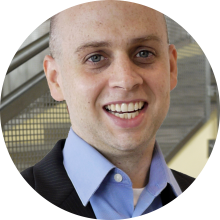
Dr. Jewell answered some questions about the progress of his project.
In simple terms, what do you study and what have you found?
One (of many) problems with treating cancer is that current drugs aren’t good at killing tumor cells without targeting our own tissues. We are working to harness the very specific ability of the immune system to selectively destroy tumor cells through cancer vaccination. Our project focuses on neuroblastoma, the same cancer that Alex had, but the work could also be applied to other pediatric or adult cancers. We are combining nanotechnology and immunology to deposit biodegradable particles in lymph nodes – tissues that actually generate the immune cells specific for viruses, tumor cells, or other pathogens. These particles are co-loaded with stimulatory immune signals and pieces of tumor cells, so the goal is to generate lots of immune cells that are specific to cancer cells that can then leave lymph nodes and travel to tumors, destroying these cells without targeting healthy cells.
What is unique about your vaccine approach?
The really cool aspect of our project is that we are depositing particles directly into lymph nodes so that we can ensure and control the kinds of signals presented to the immune system during expansion of anti-tumor T cells. We design the particles to be both safe and biodegradable, but to still allow direct control over the environment of the lymph node - something that more traditional strategies have had difficulty doing. We’re also able to control the specific kinds of immune cells that develop, and we are aiming at generating immune cells that can reproduce at particularly high rates, and that live for a long time. This latter “memory” function could also help protect kids from relapse.
What did your ALSF research grant make possible?
Everything! Before the “A” Award, we had no experience with pediatric cancer research and had no one working on this in the lab, though we were very interested. This has really been the perfect opportunity for us to become active in pediatric cancer research, and bring some unique perspective from bioengineering, materials science, and nanotechnology. My “A” Award mentor, Dr. Tony Sandler (Children’s National Medical Center) has been phenomenal as we’ve gone through this journal. Just as important, I’ve been inspired by my own lab members who have taken real ownership not just of their projects, but also in building community awareness for the need for pediatric cancer research. We’ve held lemonade stands, logged thousands of miles during Alex’s Million Miles, and raised nearly $10,000 for pediatric cancer charities (including ALSF!). As engineers, I think my whole research team also sees unique opportunities to partner with immunologists and clinicians to push forward in ways that wouldn’t be possible with each of these skill sets in isolation. By the end of our grant we’ll have learned some important ways in which biomaterials can be harnessed to combat neuroblastoma, but even more so, I’m grateful for ALSF and I Care I Cure for helping us build infrastructure and research know-how that allows us to contribute to this field after this first grant.
How would this research eventually benefit children with neuroblastoma? What has to happen to get to that point?
Right now all of our studies are in cells and in pre-clinical animal models of neuroblastoma. We have some very exciting data demonstrating we can protect animals from neuroblastoma, so we are now testing if our vaccine can eliminate tumors in animals that already have cancer. We are also working to understand how the vaccines work, for example, are tumor specific T cells generated? Do they migrate to tumors? What kinds of functions do they have? How are the environments of lymph nodes and tumors impacted by the vaccines? We’ve has some initial conversations with groups experienced at setting up small clinical trials, so if our data continues to looks good through the rest of our “A” Award, and into another larger grant we will need to push toward translational milestones, then options will be on the table to think about early trials in pediatric patients. There’s a lot of work for us and others in the field to do, but with the enormous amount of progress the field has made pediatric cancer research, it’s a great time to be optimistic!