
The 2026 Childhood Cancer Report
From diagnosis to research: measuring momentum in the search for cures
Childhood Cancer: A Group of Diseases
“Childhood cancer” is an umbrella term for many different types of malignancies—diseases in which abnormal cells grow uncontrollably and can spread throughout the body of a child or teen between the ages of 0 and 19. Like normal cells that carry out specific tasks, such as making blood or building bone, cancer cells are also specialized. They have unique biological and genetic features that drive how they grow and behave.
Childhood cancers can arise anywhere in the body:
- Leukemia and Lymphoma start in the blood and immune system.
- Sarcoma develops in bones and soft connective tissues.
- Brain and spinal cord tumors can be malignant or benign, but their location in the central nervous system makes them equally serious.
- Retinoblastoma attacks the eye, usually in very young children, threatening both sight and life.
- Neuroblastoma arises from immature nerve cells, often in the adrenal glands but sometimes in the neck, chest, or spine.
- Hepatoblastoma is a childhood liver cancer, and Wilms tumor is a kidney cancer.
Within each of these types there are many distinct subtypes; for example, there are multiple forms of leukemia, brain tumors, and sarcomas—each with their own cellular and genetic characteristics. Some, like Wilms tumor and acute lymphoblastic leukemia (ALL), now have excellent cure rates. Others, such as diffuse intrinsic pontine glioma (DIPG), a brain tumor, and osteosarcoma, a bone cancer, remain stubbornly difficult to cure.
Cases of Childhood Cancer in the United States
by type, 202313
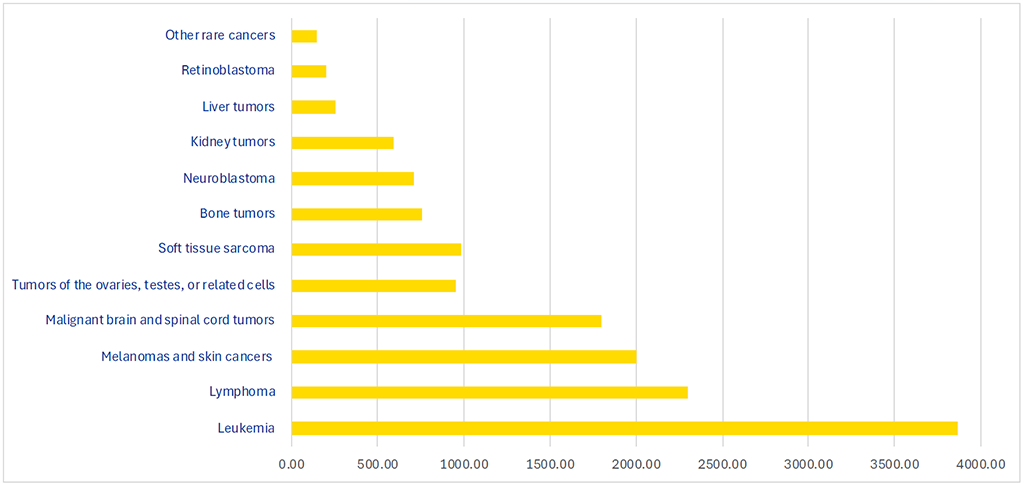
*The counts presented here only include malignant brain tumors, consistent with CDC reporting. When nonmalignant tumors are included the total number of pediatric brain tumor diagnoses is higher.
Cases of Childhood Cancer in the United States
by type and sex, 202314
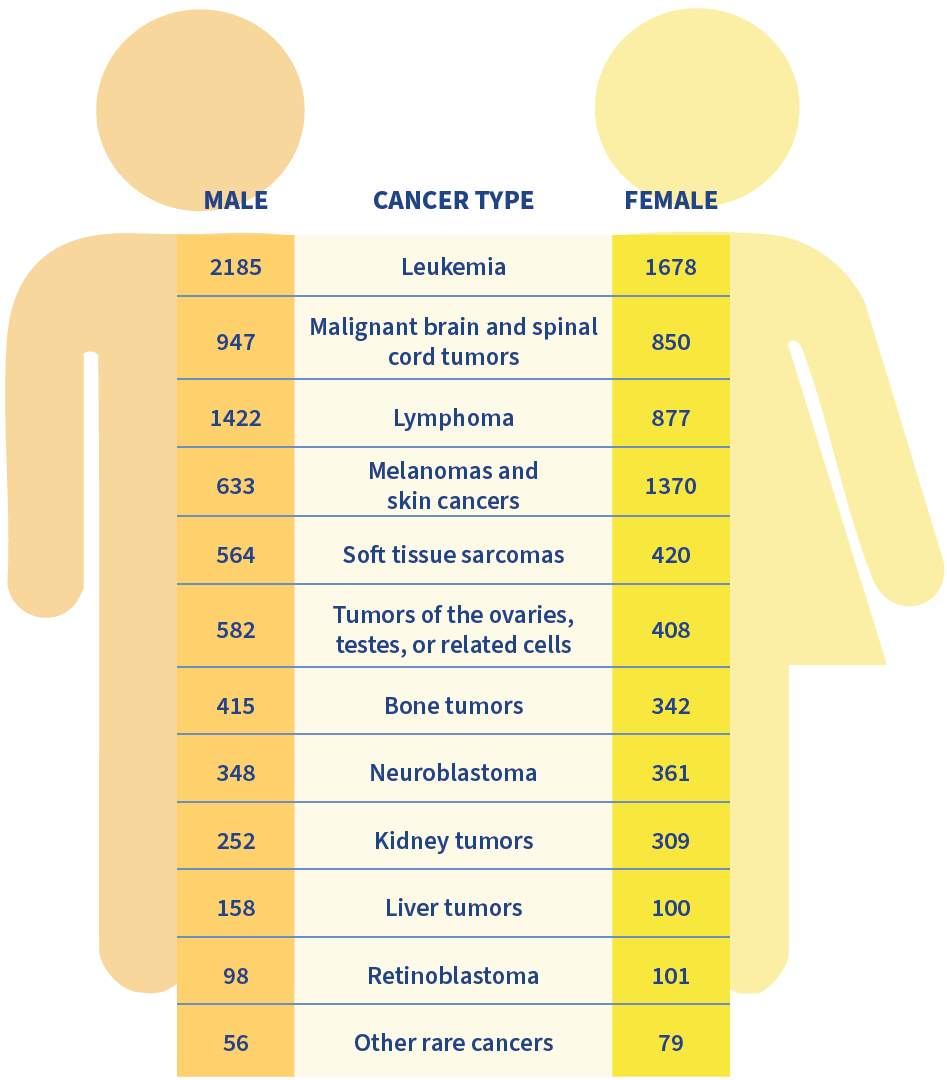
In 2023, males were diagnosed with childhood cancer approximately 11% more than females. There is no clear, definitive known reason; however, researchers think it’s a mix of biology and genetics. Boys and girls differ in hormones, immune system function, and even how certain genes are expressed (including genes on the X chromosome), which can influence cancer risk. Understanding these differences in diagnosis and sex can help researchers understand the drivers of cancer.
U.S. Childhood Cancer Deaths: A Snapshot of 202415
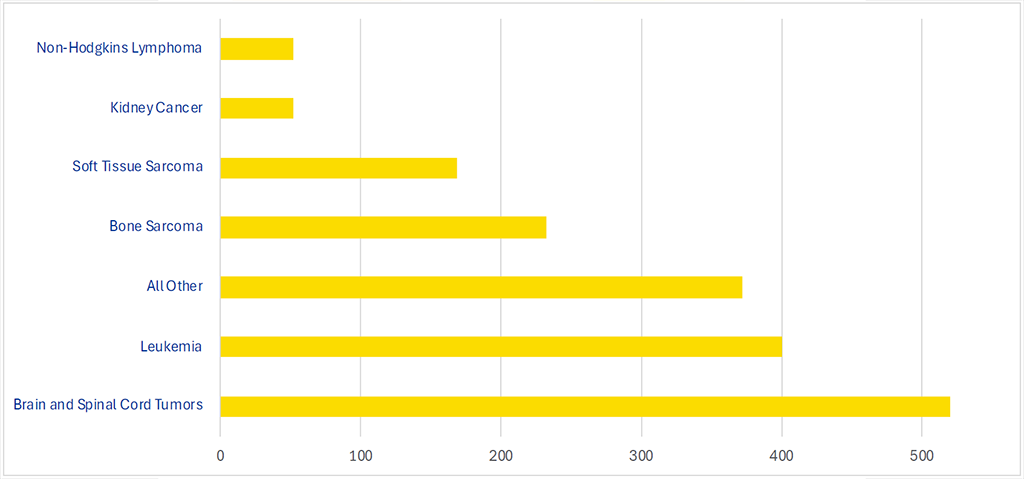
Childhood cancers are not uniformly deadly. Brain and spinal cord tumors account for the most deaths—a spot once occupied by leukemia.
U.S. 5-Year Relative Survival Rates by Type:16
The chart below shows the 5-year relative survival rates of childhood cancer by type. Relative survival is different than overall survival because it compares the survival of children with cancer to children without. Survival is tracked from date of diagnosis through cancer registrars in each state. Relapse and survival is not tracked in the same way but is sometimes tracked in clinical trials and other studies. Relative survival rates are not a prediction for individual children but instead serve as an overall population measure.
By tracking how many children in both groups are still alive after 5 years, researchers can have a realistic sense of prognosis for a disease that is not skewed by unrelated causes of death. Read more on survivorship.
| Cancer Type | 5-Year Relative Survival (%) |
|---|---|
| All Types Combined | 87.0% |
| Leukemia | 87.3% |
| Lymphoma | 95.2% |
| Brain and Spinal Cord Tumors | 76.9% |
| Neuroblastoma | 84.9% |
| Retinoblastoma | 97.3% |
| Kidney Tumors | 91.2% |
| Liver Tumors | 76.8% |
| Bone Sarcomas | 71.7% |
| Soft Tissue Sarcomas | 75.0% |
Within each of these major types of childhood cancer, there are dozens of subtypes that vary in severity and survivability.
Section 2 explores the treatment and research milestones by specific cancer type.
Key Facts

The most common type of childhood cancer is leukemia.

The deadliest childhood cancers are brain tumors, which killed 520 kids in 2024.17
