
You are here

Dana-Farber Cancer Institute

44 Binney Street
Boston, MA 2115
United States

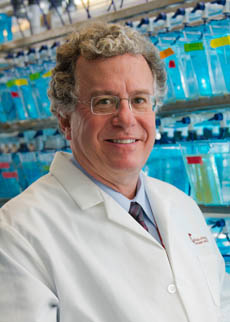
Thomas LookFor Thomas Look, MD, vice chair for research in the Department of Pediatric Oncology at Dana-Farber Cancer Institute, a Bridge Grant from the Alex’s Lemonade Stand Foundation was critical to his research into the genetic pathways drive T-cell acute lymphoblastic leukemia (T-ALL).
Neuroblastoma (NB) is an embryonic tumor of the nervous system accounting for approximately 15% of all childhood cancer deaths. High-risk neuroblastomas often worsen despite intensive chemotherapy and relapse is common and almost uniformly fatal. A major problem in being able to treat this childhood disease stems from the heterogeneity of the genetic abnormalities that underlie it, which result in a multitude of disease subtypes that make its treatment enormously difficult.

Myelodysplastic syndrome (MDS) is caused by the abnormal development of blood cells. Currently, the symptoms of MDS can be treated, but the disease itself remains incurable. About 50% of MDS-cases develop into deadly leukemia. The main reason that MDS is difficult to treat is that it is not a single disease, but consists of many subtypes with different symptoms and different underlying causes. To unravel MDS we need to exploit animal models, such as the zebrafish, that can realistically capture the complex disease and are accessible to experimental analysis in living animals.

Despite improvements in outcome over the last few decades, 15-20% of children with acute lymphoblastic leukemia and 40-50% with acute myelogenous leukemia ultimately succumb to their disease. Furthermore, current treatments result in many serious short- and long-lasting side effects. New and more effective therapies are urgently needed to increase cure rates and decrease treatment-related morbidity and mortality.

Leukemia is the most common type of cancer in children. Despite significant improvements in therapy over the past four decades, leukemia is still a leading cause of cancer-related death among children and young adults. Further improvements in leukemia therapy need to be built on a better understanding of the basic biology of cancer. A common feature of many types of cancer, including leukemia, is an abnormal number of chromosomes. An extra copy of chromosome 21, known as trisomy 21, is a hallmark of pediatric acute lymphoblastic leukemia (ALL).

Rhabdomyosarcoma is the most common soft-tissue cancer in children and adolescents and a highly aggressive from of cancer. Rhabdomyosarcoma resembles developing muscle tissue, and it is likely to arise as a 'developmental mistake' from progenitor cells that belong to the family of skeletal muscle cells. However, the precise cell type(s) from which rhabdomyosarcoma originates remain unclear. We argue here that it is important to understand the interplay between cancer-associated genes and the cell environment in which they take effect in order to develop novel, much needed treatments.

One major cause of death from cancer occurs when tumor cells leave their native location and colonize new areas in the body, causing disruption of normal biological events in that tissue or organ system. New methods of killing these cells are required, and one promising approach is to take advantage of the "stressed" nature of cancer cells, specifically killing them while leaving surrounding cells unharmed.

Dana-Farber Cancer Institute

Please see Dr. Silverman's 2011 Program Infrastructure renewal grant description.

Neuroblastoma is the most common tumor of early childhood outside of the brain. Despite efforts to improve chemotherapy and radiation treatment, few patients with advanced diseases are cured or even achieve long-term survival. The completion of the human genome project now offers new opportunities to understand neuroblastoma at the genetic level. Such understanding in turn could lead to the development of novel therapies.

Pages