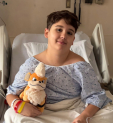
Rhabdomyosarcoma is the most common soft-tissue cancer in children and adolescents and a highly aggressive from of cancer. Rhabdomyosarcoma resembles developing muscle tissue, and it is likely to arise as a 'developmental mistake' from progenitor cells that belong to the family of skeletal muscle cells. However, the precise cell type(s) from which rhabdomyosarcoma originates remain unclear. We argue here that it is important to understand the interplay between cancer-associated genes and the cell environment in which they take effect in order to develop novel, much needed treatments.

Fighting childhood cancer, one cup at a time.