By: Trish Adkins
In 1970, an oncologist named Donald Pinkel made an extraordinary announcement: half of the children with the most common type of leukemia could now be cured. It was a landmark proclamation; for decades nearly every child with leukemia died.
The reality was more complicated. Pinkel was quick to clarify that a cure was dependent on access to treatment. Around the world, many children simply did not have access to the cutting-edge treatments of the time.
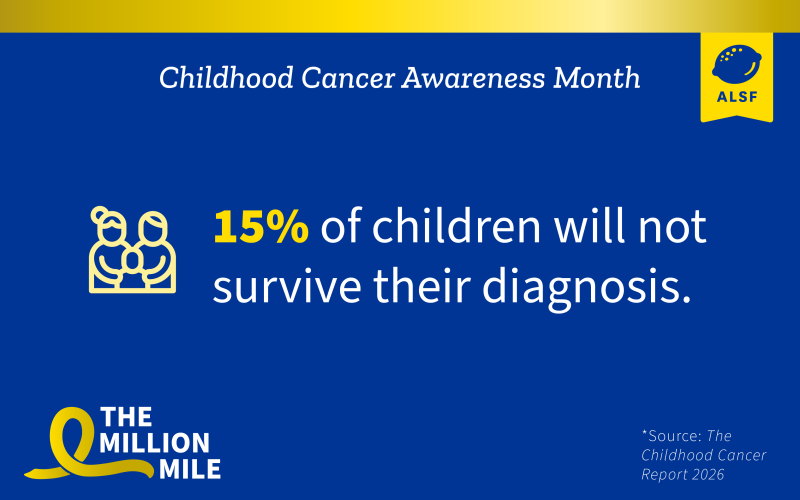
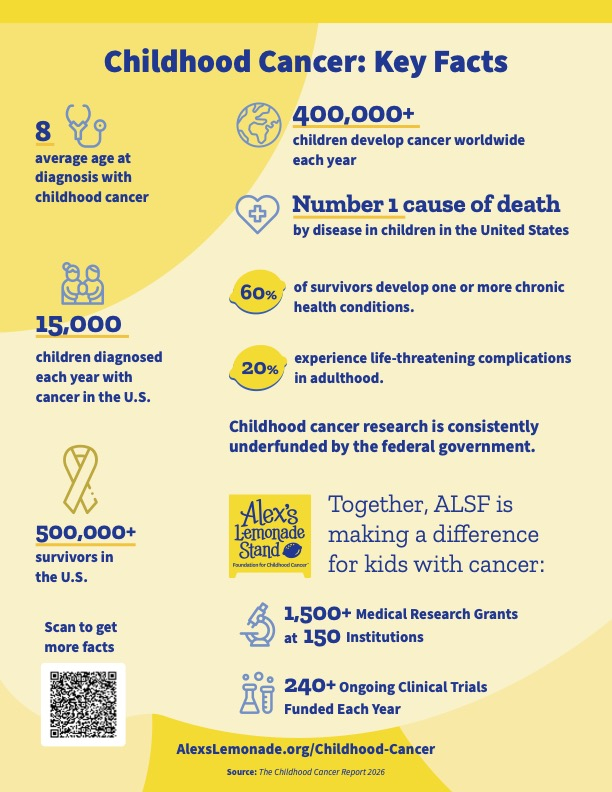
Childhood cancer treatment has come a long way, particularly in the United States. But access to treatment, research funding, treatment toxicities and financial burdens on families remain challenges. While 85% of U.S. children diagnosed with cancer survive, 15% do not.
During Childhood Cancer Awareness Month, we wanted to take a closer look at some of the facts and stories behind the case counts and survival rates. The Childhood Cancer Report 2026, a comprehensive resource from Alex’s Lemonade Stand Foundation (ALSF), brings together the data, research and history behind what we know and what we still need to learn about childhood cancer. Here are 10 things from the report that might surprise you.
1.Half the children with the most common type of leukemia could be cured in 1970.
While that sounds like a triumph, it came with conditions. Children needed to be able to access effective treatments. Building on the work of Sidney Farber, Pinkel and other researchers had developed new treatment approaches that combined multiple types of chemotherapy drugs. Today, about 90% of acute lymphoblastic leukemia can be cured.
However, Pinkel was careful with his proclamation, specifying that access to optimal care was essential to its success. This distinction remains important today: research can bring cures, but kids need to be able to access them.
2. Some childhood cancers are still extremely difficult to cure—no matter where a child lives.
In the United States, 85% of children diagnosed with cancer survive at least five years. It’s a remarkable statistic, but it still leaves 15% of children without cures.
For some cancers, treatment progress has been much slower. Children with certain aggressive bone cancers and brain tumors, for example, continue to face cancers that are difficult to treat. Research has transformed the outlook for many children with cancer, but which cancer is diagnosed can still profoundly shape their chances of survival.
3. The first FDA approval of a drug specifically to treat cancer in children only happened two decades ago.
The chemotherapy drug clofarabine was given accelerated approval in 2004 for the treatment of some types of relapsed pediatric leukemia. This “first in kids” approval was a rarity; every single other pediatric cancer drug was either first or simultaneously approved for the treatment of adult cancers. In total, there are just over 60 drugs approved by the FDA for children with cancer. That is the same number the FDA typically approves for adults in a single year.
4. Childhood cancer takes away centuries of potential life every year.
In 2019, a team of researchers collaborated on a study that modeled the global burden of childhood cancer in disability adjusted life-years (DALYS). DALYs measure the potential years lost by both sickness and death. The study findings were profound: 11.5 million healthy years were lost to childhood cancer in a single year.
 5. Some childhood cancer survivors didn't know they had cancer.
In 1989, researchers interviewed 1,928 adults who had been diagnosed with childhood cancer between 1945 and 1974. Nearly 20% didn’t know what type of cancer they had, and even more surprising, 14% said they had never had cancer at all.
At the time, survivorship was still poorly understood. Researchers were beginning to recognize that treatments that could save a child’s life could also affect a growing body in lasting ways. In 1975, a landmark article titled “Pediatric Cancer in Perspective: Cure Is Not Enough” helped establish a new way of thinking that accounted for the importance of thriving not just surviving.
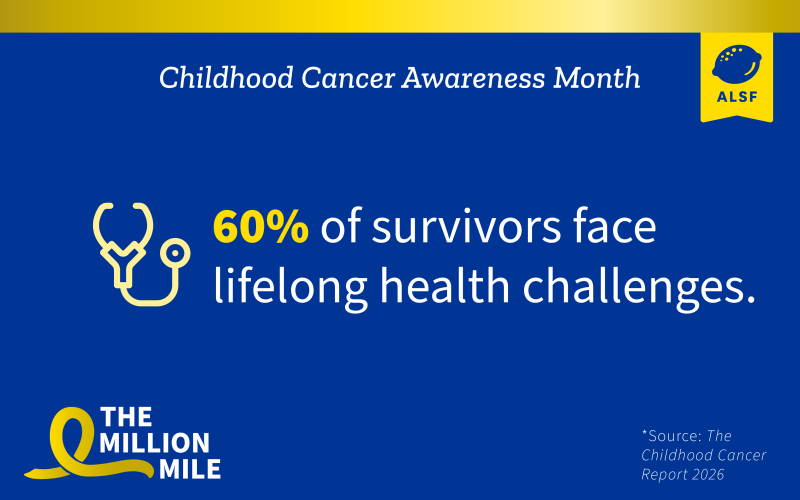
Today, there are an estimated 500,000 childhood cancer survivors living in the United States, and about 60% experience long-term health effects related to their cancer or its treatment.
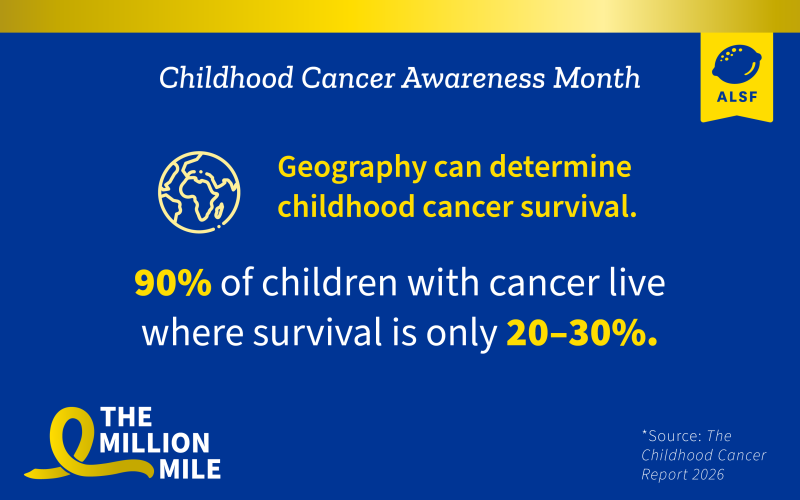
6. Getting the right treatment can mean traveling hundreds of miles.
Childhood cancer treatment isn't available everywhere. Some of the most promising treatments, like CAR-T therapy, proton radiation, and specialty clinical trials, are concentrated at a relatively small number of centers, meaning families may have to travel long distances to get the care their child needs.
More than 70% of the U.S. population lives more than 100 miles from a proton therapy center. For families living in rural areas, the distance can be even greater.
And the challenge isn't simply getting to an appointment. Families may need to temporarily relocate, take time away from work, find transportation and arrange care for other children—all while their child is undergoing treatment.
7. Every cancer diagnosis is supposed to be counted.
Cancer is a reportable disease worldwide, which means when it is diagnosed the law mandates that it must be reported to public health officials. In 2001, the U.S. established National Program of Cancer Registries (NPCR), to collect data from all 50 states. The state registries track a wide range of data-demographic, primary treatment type, specific diagnosis, geography, residence, age, patient status, and deaths.
All of this critical information can help support public health and oncology researchers as they look for trends in long-term survival (a key indicator that treatments are working), in incidence rates (by age, location, and cancer type), and other demographic factors. It can influence state public health programs, funding for childhood cancer, and the allocation of community resources.
8. Up to 18% of childhood cancers are driven by genetic predisposition.
At diagnosis, the burning question parents often have is: “What caused my child’s cancer?” Not only is childhood cancer rare, but children simply haven’t lived long enough to have collected the risk factors that come with environmental and lifestyle exposures.
While researchers do not have a full answer to that question, they do know that up to 18% of childhood cancers are driven by predisposition. Predisposition means that an individual has a genetic mutation that makes them more likely to develop cancer. These mutations can be inherited from a parent but can also form spontaneously without a familial link.
9. The cost of curing childhood cancer doesn't always end when treatment does.
For families, the financial cost of childhood cancer can extend far beyond the hospital bill. Parents may have to take time away from work, travel long distances for specialized care, pay for lodging and transportation, or relocate temporarily while their child receives treatment.
And the costs don't necessarily stop when treatment ends. Childhood cancer survivors can experience long-term or late effects of their cancer and its treatment, sometimes requiring ongoing medical care for years or even decades.
10. A 4-year-old named Alex Scott believed if we all worked together we could make a difference for kids with cancer. She was right.
In 1997, Alex Scott was wheeled out of the operating room following her first surgery to remove a neuroblastoma tumor that was precariously positioned around her kidneys and spine. It was her very first birthday. Alex would only get seven more—but in her 8 years, although just a child, she held firm to a vision that everyone could make a difference.
Her story would include more surgeries, experimental treatments, several hospitals, not enough first days of school, three brothers, and countless lemonade stands. Alex was 4 when she first asked her parents if she could host a lemonade stand to raise money for her doctors. Little did they know that Alex would be one of the many incredible visionaries who would shape and change the trajectory of research for childhood cancer.
A reporter once asked little Alex Scott if her goal of raising $1 million was possible and Alex said that if we all work together, we can do it.
The progress made in finding cures for children with cancer has been challenging, but it has happened thanks to collaboration—collaboration that will continue to grow and spread so that someday all children have cures.
 Want more insights, facts, and research progress stories in the fight for cures for childhood cancer?
Download The Childhood Cancer Report 2026. This report brings together critical data and research insights into one accessible place. Read more about statistics on childhood cancer, timelines of FDA approvals and research milestones, and the future direction of treatments and cures for all kids with cancer.
Join The Million Mile!
This September, you can challenge yourself to walk, run or bike alongside thousands of supporters to help reach a collective goal of going one million miles while raising millions of dollars for pediatric cancer research. Join The Million Mile here.