Photo Credit: Carly Sullen for Flashes of Hope
By: Trish Adkins
Just over a century ago, a child diagnosed with Wilms tumor, a type of kidney cancer, was given a treatment protocol that included a high-risk surgery and care to ensure what was then called an “easeful death.” It was the late 19th century version of palliative and hospice care.
Today, 90% of kids with Wilms tumor are cured. Getting here took time and teamwork. Beginning with new surgical techniques in the 1930s and then the addition of radiation and chemotherapy in the next two decades, researchers and clinicians kept refining treatment for kids with Wilms tumor. By the latter half of the 20th century, researchers turned their eye toward dedicated Wilms tumor clinical trials, and they haven’t stopped.
Researchers continue to use genetic profiling and tumor biology to find safer treatments, preserve kidney function, and work toward pushing that 90% to 100%.
The shift for Wilms tumor wasn’t instant or singular. It came in phases and with the talents of many—surgeons, researchers, oncologists, and later, foundations like Alex’s Lemonade Stand Foundation that work to raise funds for research. The story is the same for all the breakthroughs that are helping kids with cancer. Not one is the work of a singular person, everything is the product of years of research, teamwork, collaboration, and a belief that together we make a difference for kids with cancer.
The history of childhood cancer is best told by the stories of persistence, collaboration, science, and the kids who paved the way. It is more than one moment in history. It is a story still being written.
Here are five breakthroughs:
1. Cures become possible.
Like with the story of Wilms tumor, childhood cancer has seen incredible shifts to an 85% overall cure rate in the United States. Just 50 years ago, the five-year survival rates were only 58%. This is, of course, thanks to advances in research, the geographic availability of specialized treatment centers, and increased research funding.
This overall progress is encouraging, but dismal cure rates still exist for several types of childhood cancer. While common types of leukemia have close to 80% cure rates, pediatric brain tumors remain the deadliest type of cancer in kids. Some high-grade gliomas have virtually no long-term survivors.
In addition, access to treatment remains a persistent problem for children in low- and middle-income countries, where cure rates can be as low as 20% for cancers that are curable in the U.S.
The progress made continues to fuel the hope that all kids—regardless of their diagnosis or residence—can someday have access to cures.
2. Treatments became more precise.
As technology continues to push forward, new treatments for kids have emerged. Proton radiation, a safer type of radiation therapy, became available to children with brain tumors in 2007. In 2017, the FDA approved the first type of CAR-T immunotherapy, kymriah, for kids with certain types of leukemia.
Then in 2018, the FDA approved a drug called larotrectinib for the treatment of kids with a specific mutation called NTRK. This drug changed the upfront treatment for kids with infantile fibrosarcoma, a tumor that typically occurs in infancy, largely replacing chemotherapy. More promising targeted therapies are being studied for kids, ranging from types of immunotherapy to tiny nanoparticles to molecular degraders that attach to tumors and destroy them.
Researchers are continuing to make new discoveries: finding new cancer proteins that drive cell growth, creating new molecules that could turn into tomorrow’s approved treatments, and studying the long-term impacts of newer approved treatments.
3. More drugs became available for children.
While developing new drugs for kids and getting them approved by the FDA remains a major challenge, the past two decades have brought more pediatric cancer treatment approvals than ever before.
Over the past five years, 53 FDA approvals have expanded treatment options for children with cancer, representing nearly 25 unique drugs. ALSF-funded research contributed to the development of at least half of these unique drugs. That's a pretty remarkable return on decades of research investment. And it illustrates an important truth about childhood cancer research: today's approved treatment may have started as yesterday's unanswered question.
Additional legislation, like the Research to Accelerate Cures and Equity (RACE) for Children Act, which requires drug companies to research cancer targets for pediatrics and adults, have led to more research and more collaboration between pharmaceutical companies and academic labs.
However, a significant gap still exists. Children wait 6.5 years longer for new cancer drugs than adults. A survey of the oncology clinical trials open in the United States shows the disparity in research options for kids: only 17% of the 26,000 recruiting clinical trials are for children.
4. Data became a research accelerator.
Researchers have collected information about tumors, genes, treatments, and outcomes for decades. The challenge has been turning all of that information into something researchers can easily find, understand, share, and use.
In 2017, Alex’s Lemonade Stand Foundation launched the Childhood Cancer Data Lab to help remove those roadblocks. The Data Lab develops tools that make large amounts of childhood cancer data more accessible, mineable, and reusable, while training researchers to work with increasingly complex datasets. Today, the Data Lab has trained more than 400 childhood cancer researchers and harmonized more than 1.3 million data samples.
That matters because one researcher’s data can become another researcher’s starting point. A dataset collected for one study can help answer a completely different question. Researchers can compare information across studies and look for patterns that might otherwise remain hidden.
The breakthrough isn't simply having more data. It's making data work harder.
5. Alex started a legacy of collaboration—and it continues today.
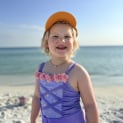
In 2000, 4-year-old Alexandra “Alex” Scott decided to hold a lemonade stand to raise money to help doctors find cures for children with cancer. What began in her front yard became a movement, and eventually, Alex’s Lemonade Stand Foundation (ALSF).
Alex died in 2004 at age 8. But her idea did not.
Since our first grant in 2005, ALSF has funded more than 1,500 childhood cancer research projects. It provides grants to researchers at institutions across the country and around the world, filling gaps in funding and helping promising ideas move forward.
That legacy is bigger than any single research discovery. It is the idea that no one researcher, institution, or organization can cure childhood cancer alone.
Today, ALSF funds early-career scientists who are bringing new ideas into the field, research accelerator grants designed to move promising discoveries forward, and large collaborative efforts such as the Crazy 8 Initiative, which brings researchers together to tackle some of the deadliest childhood cancers.
The work continues because the goal Alex imagined hasn't changed: find cures for all children with cancer.
Download the Childhood Cancer Report 2026 to explore the research, discoveries and stories moving childhood cancer research forward.