
By: Trish Adkins
If you ask 9-year-old Quincy what he would do with $100,000, he’ll tell it to you straight:
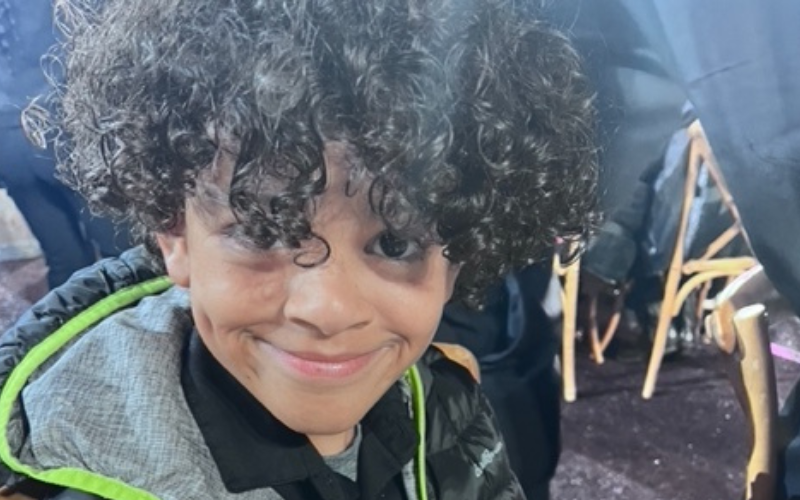
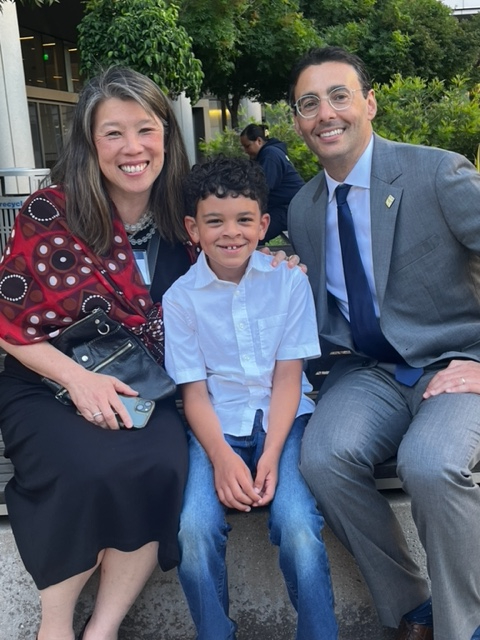
“I don’t think that is a responsible thing to ask me,” he’d say with bright eyes shining under a full head of curls. Quincy is just an ordinary 9-year-old, after all. His concerns are playing sports (baseball, swimming, martial arts), messing with coding to make video games better, and finding some time on Saturday mornings to lay on his couch (which might be one of his favorite things).
When you ask Quincy’s parents what they’d do with $100,000 they have a ready answer: fund childhood cancer research.
“We’d pay it forward,” said his mom, Lara.
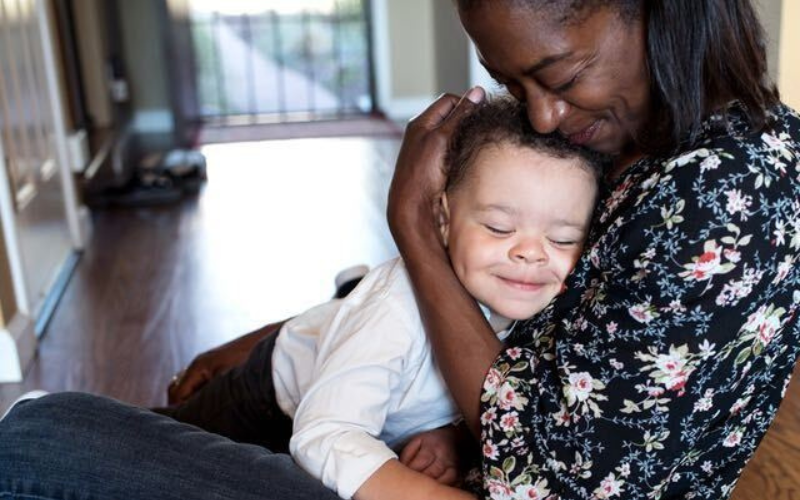
Once, during a time Quincy does not remember, Quincy was anything but ordinary. He was a 4-month-old in the operating room having a splenectomy to remove a spleen so enlarged from leukemia that it was “as fat as a football.” His parents, Lara and David, remember the days leading up that surgery. Quincy had fevers, respiratory illnesses, and a strange rash on his face that dermatology couldn’t figure out. Then his belly got bigger – which led to an ultrasound and bloodwork.
Help kids like Quincy this Giving Tuesday
The family wasn’t home 15 minutes when they got the call to get back to the hospital.
 Lara, a registered nurse, knew how quickly things would move. Quincy had his first blood transfusion right away. Treatment began and decisions needed to be made. For David, everything about this felt confusing.
“At that point in my life, the word chemotherapy was so foreign to me. I thought that only people who were about to die got it. And he was a 4-month-old baby. It just doesn’t equate, right?” said David.
Quincy had a rare type of leukemia called juvenile myelomonocytic leukemia (JMML). JMML typically affects children under a year old. Only 1% of all pediatric leukemias are JMML, and of those kids, only half reach long-term remission. The standard treatment is chemotherapy to reduce the burden of leukemia in the blood followed by a hematopoietic stem cell transplant.
It became apparent that the standard chemotherapy wasn’t working for Quincy. He kept getting sicker, his spleen wasn’t shrinking, and he wasn’t stable enough for a transplant. His spleen would have to be removed and his medical team would be forced to look outside their usual toolkit for a cure.
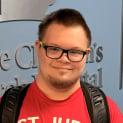
On his treatment team at the University of California San Francisco were two Alex’s Lemonade Stand Foundation (ALSF)-funded researchers, Dr. Mignon Loh and Dr. Elliot Stieglitz (pictured above). They ordered a genetic test called the UCSF500. The test screens for cancer genes and found a mutation called FLT3. FLT3 is a genetic abnormality typically seen in some adult cancers, but little Quincy had it too. And there was a medication for FLT3, but it never had been studied in kids or in leukemia. Trusting their team and without options, Lara and David agreed to try the drug.
“We didn’t have any choice,” said David.
The drug worked. Quincy's parents remember when they got the call that treatment was effective – they have a recording of Quincy’s doctor giving them the news. “We made her repeat it a few times, just so it could sink in,” said David.
Quincy was stable enough for a stem cell transplant – with David as his donor. Quincy was just under a year old. After a 29-day hospital stay, he was released and began the journey towards survivorship. “It was really a miracle,” said Lara. Research is what she credits with Quincy’s cure and knows that more research is what will make the difference for all kids with cancer.
“We want to find a cure for everybody else that comes behind Quincy,” said Lara.
Quincy goes back to oncology once a year for follow-up appointments. Without a spleen, Quincy is at high risk for more serious infections; every fever requires an ER visit for bloodwork and the family is hypervigilant about handwashing and hygiene. His parents and doctors don’t notice any other late-term side effects from treatment. And while Quincy doesn’t remember his days in treatment, his parents tell him the stories and teach him about the importance of giving back. Quincy’s hosted a lemonade stand for ALSF – raising over $3,000.
But mostly, Quincy has made it to the place where all kids with cancer hope to be: a place of sports and school days and Saturday mornings, resting up for the next adventures with childhood cancer far in the rearview.

Let's Raise $100,000 for Kids with Cancer, Together
December 2 is Giving Tuesday and we have a big goal. It only takes $50 to fund an hour of research, and every hour gives kids more time for their cures to be found. Give today and ALDI will generously match all online donations made to Giving Tuesday fundraisers for Alex's Lemonade Stand Foundation (up to $100,000)! You can make a difference!