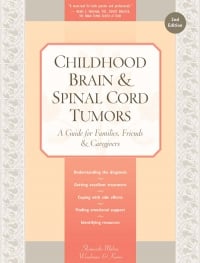

Childhood Brain and Spinal Cord Tumors
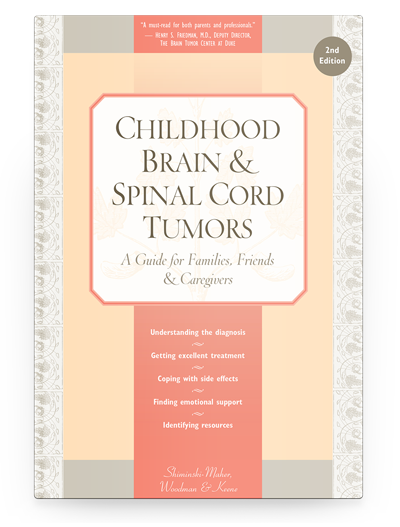
Childhood Brain and Spinal Cord Tumors
A Guide for Family, Friends & Caregivers, 2nd ed.
By Tania Shiminski-Maher, Catherine Woodman, MD, and Nancy Keene
Copyright 2014
Brain tumors are the most common solid tumors in children. This guide focuses on various childhood brain and spinal cord tumors, including medulloblastoma, astrocytoma, primitive neuroectodermal tumors (PNET), brainstem gliomas, hypothalamic gliomas, atypical teratoid/rhabdoid tumor (AT/RT), ependymomas, craniopharyngiomas, germ cell tumors, and choroid plexis tumors. It highlights personal stories from children with brain and spinal cord tumors and their families, as well as discusses topics such as:
- Understanding your child's diagnosis
- Telling your family and friends
- Finding the best treatment for your child
- Coping with side effects
- Identifying additional resources
We believe families facing a childhood brain or spinal cord cancer diagnosis will find this guide helpful. The third edition of this book will feature updated information and stories and will be published in 2027.
|
Presented by |
Table of Contents
All Guides- Introduction
- 1. Diagnosis
- 2. The Brain and Spinal Cord
- 3. Types of Tumors
- 4. Telling Your Child and Others
- 5. Choosing a Treatment
- 6. Coping with Procedures
- 7. Forming a Partnership with the Treatment Team
- 8. Hospitalization
- 9. Venous Catheters
- 10. Surgery
- 11. Chemotherapy
- 12. Common Side Effects of Chemotherapy
- 13. Radiation Therapy
- 14. Peripheral Blood Stem Cell Transplantation
- 15. Siblings
- 16. Family and Friends
- 17. Communication and Behavior
- 18. School
- 19. Sources of Support
- 20. Nutrition
- 21. Medical and Financial Record-keeping
- 22. End of Treatment and Beyond
- 23. Recurrence
- 24. Death and Bereavement
- 25. Looking Forward
- Appendix A. Blood Tests and What They Mean
- Appendix C. Books and Websites
How to Use this Book
Alex’s Lemonade Stand Foundation’s Childhood Cancer Guides are helpful resources for childhood cancer families. We’ve combined important information about diagnoses, treatments, procedures, coping mechanisms, survivorship, and more with personal stories from children and their loved ones so that newly diagnosed childhood cancer families can feel prepared and supported when starting treatment.
The cancer-specific guides are organized in a way that parallels most families’ journeys. They start with a chapter about receiving a cancer diagnosis, followed by chapters about choosing treatment options, coping with procedures, communicating with medical staff, and more. However, each chapter in the books can stand alone, so you can skip sections and only read the chapters you feel are most relevant to you at this moment in time.
When collecting stories from childhood cancer families, we wanted to emphasize the variety of experiences a child may have when undergoing treatment. Every child sails smoothly through some portions of treatment but encounters difficulties during others. Only a fraction of the problems that parents describe will affect your child. We hope these guides will offer you a better understanding of the variability of cancer experiences so that you can offer support to your own child as well as to other families you meet with differing diagnoses and circumstances.
We hope these guides are helpful resources for childhood cancer families as well as extended family members, caregivers, friends, and other loved ones. You can view the ebook version of each guide by clicking “Read This Guide.” If you are a childhood cancer family, you can request a free PDF version by clicking “Request a PDF Version” or a physical copy by clicking “Request a Printed Version.” If you are not a childhood cancer family but would like a physical copy, you can purchase one from Alex's Shop.