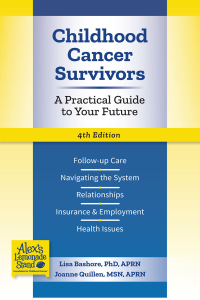
Childhood Cancer Survivors
Foreword
Through our roles at Alex’s Lemonade Stand Foundation, we’ve had the privilege of meeting childhood cancer survivors of all ages. We’ve encountered children years out from treatment who were still in elementary school, teens who were treated as toddlers, and young adults just beginning life after childhood cancer. We know their stories and we know their families, who always inspire us with their strength, honesty, humor, and hope. Their stories have shown us that childhood cancer doesn’t end when treatment ends and taught us the motto that pediatric oncologists repeat in research labs and clinics, “a cure is not enough,” should be a rallying cry for all of us.
In certain areas of the world, survivorship is growing, thanks to research and access to cutting-edge treatments. Over the past two decades, mortality rates continue to decrease and 80% of children diagnosed with cancer in the U.S. and Europe will survive. We believe research and efforts to improve access to treatment in underserved areas all over the world will increase that number to 100%. While scientists tirelessly work for cures, other researchers will continue to study the impact cancer and its treatment have on children.
The moment childhood cancer enters the family’s picture, entire lives change. Life-saving treatments bring opportunities for cures but carry terrifying risks and possible late effects. Family dynamics change. Dreams for the future shift. Cancer leaves a mark on everything it touches: growing bodies, relationships, and futures. To those outside of childhood cancer, a cure might seem like the finish line. But to those on the inside, the children and the families, the cure is the start of the survivorship journey.
Childhood cancer survivors talk about the uncertainty and loneliness that comes in survivorship. Each diagnosis, even within the same cancer type, is as unique as the child impacted. For these children who have endured so much, the future should be healthy, productive, and happy.
The 4th edition of Childhood Cancer Survivors reflects years of progress, not just in scientific research, but in building a supportive community for families impacted by childhood cancer. Leading clinicians and researchers share their practical and science-based insights; while childhood cancer survivors and their families share their personal experiences navigating life after treatment ends.
This guide isn’t just for survivors, but also for caregivers, community healthcare providers, and oncologists. Inside these pages, we hope that childhood cancer survivors and their families find community and camaraderie. We hope that pediatricians and other community healthcare providers use this resource as a guide to support their young patients as they transition from oncology patient to oncology survivor. We hope this guide continues to be the book families and survivors turn to as they navigate uncertain waters.
Finally, our hope is that someday, this book can be handed to every single child who battles cancer, along with the promise of a healthy future each one deserves.
Until there are cures for all children,
Liz and Jay Scott, Co-executive Directors,
Alex’s Lemonade Stand Foundation
Table of Contents
All Guides- Acknowledgements
- Contributors
- Foreword
- Preface
- 1. Survivorship
- 2. Emotions
- 3. Relationships
- 4. Navigating The System
- 5. Staying Healthy
- 6. Genetic Testing And Childhood Cancer
- 7. Diseases
- 8. Fatigue
- 9. Brain And Nerves
- 10. Hormone-Producing Glands
- 11. Eyes And Ears
- 12. Head And Neck
- 13. Heart And Blood Vessels
- 14. Lungs
- 15. Kidneys, Bladder, And Genitals
- 16. Liver, Stomach, And Intestines
- 17. Immune System
- 18. Muscles And Bones
- 19. Skin, Breasts, And Hair
- 20. Subsequent Malignancies
- About The Editors