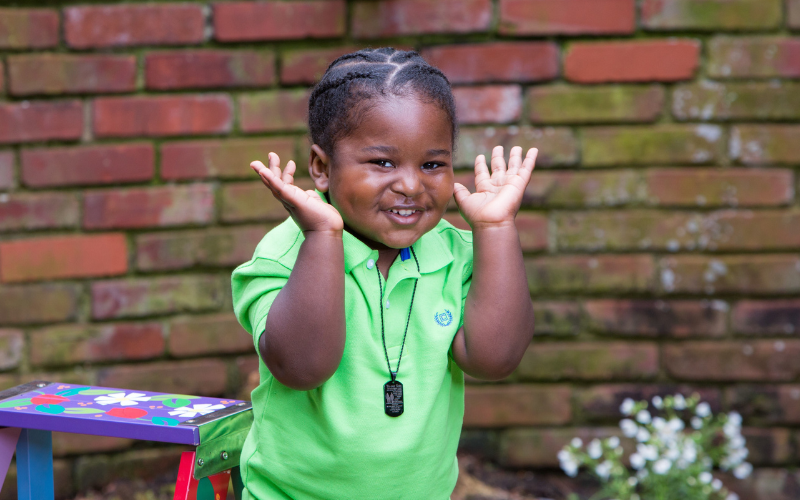
 Raymeer was just four months old when an undifferentiated soft tissue sarcoma blocked his airway, causing him to stop breathing.
 At age 3, Declan developed headaches that led to the diagnosis of central nervous system rhabdomyosarcoma.
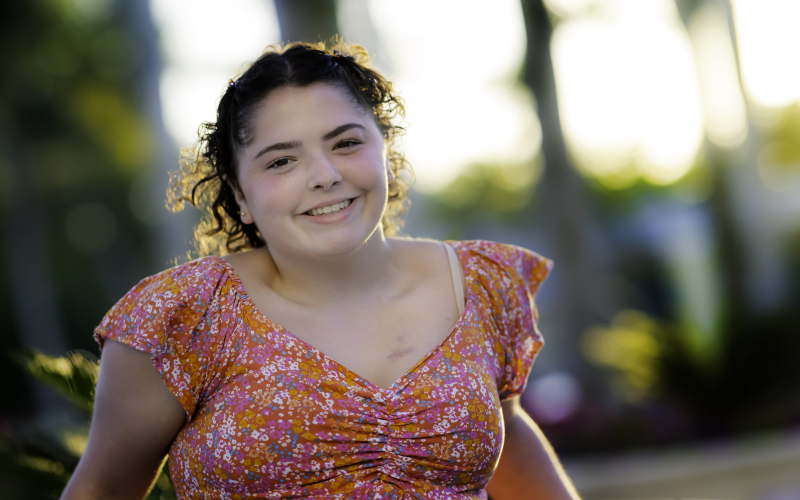 Sonia thought her relentless cough was caused by pneumonia or another respiratory illness. Instead, she learned she had metastatic Ewing sarcoma.
 Lakelynn was diagnosed with a rare, inoperable sarcoma at age 3
 Taylor was 11 years old when pain in her arm—initially thought to be a sports injury—was diagnosed as osteosarcoma.
By: Trish Adkins
Sarcomas account for at least 11% of all pediatric cancer diagnoses,* affecting nearly 1,800 children in the United States each year. The word sarcoma comes from the Greek words for "fleshy" and "tumor," reflecting the fact that these cancers arise in the body's connective tissues. More than 70 different types of sarcoma can affect children, making diagnosis and treatment especially complex.
Because sarcomas can develop almost anywhere in the body, they vary widely in how they grow and how they respond to treatment. That's why continued research—and precision approaches to diagnosis and care—are so important.
Here are five facts about pediatric sarcomas and the children whose stories bring them to life.
1. Sarcomas are cancers of the body's connective tissues.
Sarcomas begin in the body's connective tissues—including bone, muscle, cartilage, fat, tendons, ligaments, and other supportive tissues. Because connective tissue exists throughout the body, sarcomas can develop in many different places and behave in very different ways.
Some examples include:
• Osteosarcoma, which starts in bone.
• Ewing sarcoma, which usually begins in bone or nearby soft tissue.
• Rhabdomyosarcoma, which develops from cells related to skeletal muscle.
• Synovial sarcoma, which typically occurs near joints and tendons.
Raymeer was just four months old when an undifferentiated soft tissue sarcoma blocked his airway, causing him to stop breathing. Over the next year, he underwent chemotherapy and proton radiation to treat his cancer.
Today, Raymeer is cancer-free. Like many childhood cancer survivors, however, he continues to navigate some of the long-term effects of treatment—a reminder that survivorship is an important part of every cancer journey.
2. There are more than 70 different types of sarcoma.
Pediatric sarcomas are not one disease, but a diverse group of more than 70 cancers. Some begin in bone, while others develop in muscle, fat, nerves, or other connective tissues. Each type has its own biology, meaning treatment approaches and outcomes can differ considerably. Examples include osteosarcoma, Ewing sarcoma, rhabdomyosarcoma, infantile fibrosarcoma, desmoplastic small round cell tumor, alveolar soft part sarcoma, desmoid tumors, inflammatory myofibroblastic tumor, NTRK-rearranged spindle cell sarcoma, and synovial sarcoma.
At age 3, Declan developed headaches that led to the diagnosis of central nervous system rhabdomyosarcoma. He endured nearly two years of treatment but passed away four months before his fifth birthday. Today, Declan's family continues to honor his legacy by advocating for children with cancer and raising funds for Alex's Lemonade Stand Foundation (ALSF) to help advance research for the next generation of patients.
3. Sarcomas can spread throughout the body.
Some sarcomas become especially difficult to treat once they spread, or metastasize, to other parts of the body. Bone sarcomas such as osteosarcoma and Ewing sarcoma commonly spread to the lungs, where treatment becomes more challenging and survival rates are significantly lower than when the disease is localized.
Sonia thought her relentless cough was caused by pneumonia or another respiratory illness. Instead, she learned she had metastatic Ewing sarcoma. Over the course of her treatment, she has faced tumors in her lung, trachea, ankle, knee, and even her toe. Research continues to create new options for children like Sonia. After standard treatments, she enrolled in a clinical trial evaluating an experimental targeted therapy that has helped keep her tumors stable.
4. Precision medicine is changing what's possible for some children with sarcoma.
One of the most exciting advances in pediatric sarcoma research is precision medicine—matching treatment to the genetic changes that drive a child's cancer. In 2018, the FDA approved larotrectinib for cancers with a specific genetic change called an NTRK fusion, including certain rare pediatric sarcomas. This milestone, made possible in part through research supported by ALSF, provided a new targeted therapy with high response rates and fewer side effects than traditional chemotherapy for many eligible patients.
Lakelynn was diagnosed with a rare, inoperable sarcoma at age 3. She was treated with larotrectinib and experienced a remarkable response. Today, Lakelynn is 12 years old and thriving. Her story reflects what's possible when scientific discoveries become new treatment options for children.
5. Research is changing what's possible.
Every advancement in childhood cancer treatment begins with research. Alex's Lemonade Stand Foundation has funded more than 280 sarcoma-focused research grants, helping scientists better understand these rare cancers and develop more effective treatments.
Taylor was 11 years old when pain in her arm—initially thought to be a sports injury—was diagnosed as osteosarcoma. After conventional treatments failed, she enrolled in a clinical trial led by an ALSF-funded researcher. That trial gave Taylor another chance. Today, she is a nurse, a wife, and the mother of two children—living proof of the life-changing impact that research can have for children with cancer.
Every child diagnosed with sarcoma has a different journey. Some become long-term survivors. Some continue to live with the lasting effects of treatment. And some, like Declan, remind us why there is still so much work to do. Research is helping us better understand these rare cancers, develop more effective therapies, and bring hope to families facing a diagnosis today. Learn more about the sarcoma research ALSF funds—and how you can help accelerate the next breakthrough—by making a donation today.
*Source: Childhood Cancer Report 2026