Childhood Cancer Survivors
The Heart
The heart is a four-chambered, muscular organ that pumps blood throughout the body. It is approximately the size of a clenched fist and is located beneath the breastbone (sternum) in the center of the chest cavity. It is a hollow organ with thick walls of cardiac muscle. A double-walled sac, the pericardium, surrounds the heart and helps anchor it in place with connections to the diaphragm and sternum.
The heart has two sides, separated by a thick, muscular wall called the septum. The two upper chambers of the heart are called the right atrium and left atrium. The lower chambers are the left and right ventricles. The atria (plural for atrium) receive blood coming in from the lungs and the body. They squeeze blood into the ventricles, which then pump it out to the lungs and body.
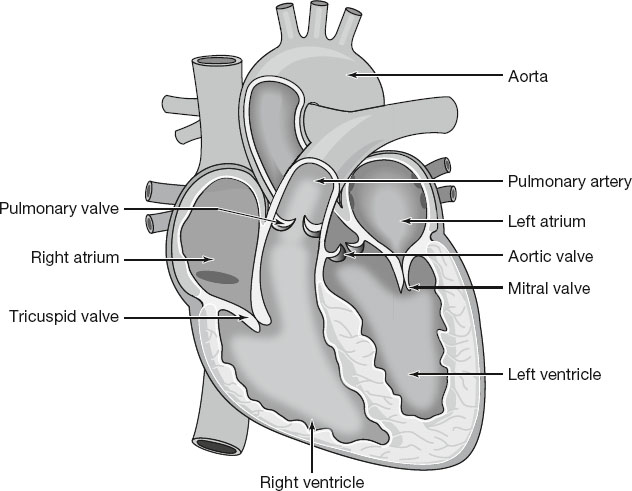
FIGURE 13-1. Anatomy of the heart and valves. (©Alexʼs Lemonade Stand Foundation, 2025)
Valves in the heart prevent blood from flowing backward. The valve between the left atrium and the left ventricle is called the mitral valve, and the valve between the right atrium and right ventricle is called the tricuspid valve. Two other valves are located between the ventricles and the major blood vessels; one leads to the lungs (called the pulmonary valve) and the other to the rest of the body (called the aortic valve). Figure 13-1 shows the anatomy of the heart and valves.
Heart muscle damage from treatment
The muscles in the heart are made up of cells called myocytes. By 6 months of age, an infant heart contains the adult number of myocytes. Further growth of the heart occurs from growth of these existing cells. Chemotherapy drugs called anthracyclines—daunorubicin (Cerubidine), doxorubicin (Adriamycin®), epirubicin, and idarubicin—sometimes damage or destroy myocytes. The remaining cells enlarge and stretch to try to compensate for the damage. This can cause thin and stiff ventricular walls, which reduce the heart’s ability to contract effectively.
If the muscle of the heart is weakened, the heart may not pump as well as usual. This is called cardiomyopathy. Some survivors with early-stage cardiomyopathy don’t have any symptoms, while others have problems if the heart can no longer keep up with the demands brought on by growth, pregnancy, isometric exercise (e.g., weight lifting, pull-ups, push-ups), or activities of daily life.
Chemotherapy
The number of cells destroyed or damaged is related to several factors: dose of anthracyclines, whether the heart was also irradiated, and other risk factors, such as being female and age (children younger than age 2 are at highest risk). In addition, there are other risk factors that are not yet known or understood especially now that we are learning more about genetic risks for heart dysfunction.
Anthracyclines can also interfere with the rhythm of the heart and how signals are carried through the heart to make it beat regularly. Children treated with anthracyclines may be at risk for rhythm and conduction problems of the heart that can result in irregular heartbeats, called arrhythmias.
Some patient treatment plans incorporate drugs such as dexrazoxane (Zinecard) to see if they will minimize damage from anthracyclines. This drug is typically given with every anthracycline dose in cancer treatment trials. During the last three decades, researchers have learned more about the long-term cardiac effects of anthracyclines, and lower cumulative doses are now being used whenever possible.
All survivors who were given anthracyclines should be periodically checked for cardiac damage for the rest of their lives. You and your healthcare provider should refer to the guidelines and recommended screening schedules online at: Children’s Oncology Group, Long-Term Follow-Up Guidelines for Survivors of Child, Adolescent, and Young Adult Cancers, V6 (Oct 2023). See Resources for website and link for the current recommendations for appropriate life-long screening based on treatment exposure. Also, many survivors with changes in the pumping ability of the heart have no symptoms and the changes may not at all interfere with life activities. Consequently, it is important for survivors to know about possible cardiac effects, be checked for them on a regular basis, and discuss any abnormal test results with their healthcare providers.
Anthracyclines are not the only drugs that can damage the heart. Very high doses of cyclophosphamide (Cytoxan®) given in preparation for a stem cell transplant may also cause heart damage. The walls of the left ventricle may thicken, leading to heart problems years or decades later. This rare complication may worsen if the child or teen also had radiation to the chest and/ or received anthracyclines.
The risk of developing heart problems may be greatest for survivors who had changes in their cardiac function noted on an electrocardiogram (EKG) or echocardiogram during or shortly after the end of therapy. Very long-term research studies are needed to determine who is most at risk.
Radiation
Radiation can cause several late effects to the heart. Children or teens at possible risk for late effects are those who received spinal radiation (for central nervous system–brain/spine tumors), chest radiation (for Hodgkin lymphoma or non-Hodgkin lymphoma), left flank radiation (for Wilms), or radiation directly to the heart. Modern radiation techniques using lower total doses, hyperfractionation (smaller doses more often), and cardiac shielding (protecting the heart from radiation) are much less likely to cause damage. It is hoped that the use of proton therapy (radiation therapy that uses protons instead of x-rays) will reduce damage to healthy organs.
Whether the heart sustains injury after radiation treatment depends on several factors, including the following:
Total radiation dose (amount of radiation delivered at each visit x the number of visits)
Dose of radiation fractions (amount of radiation delivered at any individual visit)
Extent and areas of the heart treated
Presence of tumor in or next to the heart
Chemotherapy drugs used
Age, weight, blood pressure, family history, smoking, and cholesterol levels do not change the likelihood of developing heart damage, but can magnify its effect later in life in those who have damage.
Damage to the heart muscle from high-dose radiation can lead to restrictive cardiomyopathy and arrythmias. Restrictive cardiomyopathy is when the heart muscle becomes stiff and the heart cannot adequately fill with blood. This may lead to problems in the pumping action of the heart. Valves in the heart can also be damaged by radiation (see later section in this chapter about valve damage).
Signs and symptoms of heart damage
The signs and symptoms for radiation-induced heart damage vary widely. Most damage is caused by higher doses of chemotherapy/radiation and older radiation techniques. Children and adolescents treated for Hodgkin lymphoma with mantle radiation using modern doses and heart shielding may still develop heart problems, and need to be followed over time to see if any long-term late effects develop. Some of the coronary arteries cannot be protected by shielding because of their location.
Restrictive cardiomyopathy. Restrictive cardiomyopathy can develop months, years, or decades after treatment for childhood cancer ends.
Early signs and symptoms of restrictive cardiomyopathy include:
Increasing fatigue
Decreased ability to exercise
Shortness of breath, especially with exercise
Feeling full after only a few bites of food
Increased difficulties with regular activities of daily life
If you have any of the risk factors for heart damage, these signs and symptoms should prompt you to get a thorough evaluation of your heart. Fatigue alone can be caused by a multitude of things, but if it is getting worse or is accompanied by other symptoms, get it checked out.
Later signs and symptoms of restrictive cardiomyopathy include:
Swollen lower legs and feet (called edema)
Rapid or irregular heartbeat
Rapid breathing
Difficulty exercising
Dizziness
Chest pain
Arrhythmia. The electrical pathways that control the heart’s rhythm can be damaged by treatment, which can result in arrhythmia (i.e., abnormally fast, slow, or irregular heartbeat). You may be asymptomatic or may have some of the following symptoms:
Palpitations (a feeling that the heart is beating strongly)
Rapid heartbeats
Skipped beats
Dizziness or lightheadedness
Fainting
Some healthcare providers (doctors and nurse practitioners) are not aware of the risks for heart problems from your treatment for childhood cancer. If you find this to be the case, get a second opinion from a healthcare provider who is well versed in cardiac late effects associated with cancer treatment.
Screening and detection for cardiac damage
Survivors at risk for late cardiac damage are those who received anthracyclines and/or radiation to the heart (which can occur during radiation to the chest, whole lung, left kidney, and possibly the spine). Even if there are no symptoms, any survivor who received these therapies should have an annual examination to identify risk for cardiac deterioration, to help decide the best medical management, and to guide lifestyle choices. You need to share your cancer treatment summary with your healthcare provider as they need to be aware of radiation/chemotherapy/medications you were exposed to and the possible risks to the heart.
The minimum testing should include:
Thorough medical history
Fasting blood levels of cholesterol (lipid panel)
Physical examination
Chest x-ray
Echocardiogram
12-lead EKG
Baseline cardiac stress test to get a clear picture of oxygenation of heart muscle
The type of routine cardiac screening for survivors of childhood cancer depends on the treatment received. For cardiomyopathy, an echocardiogram is done (how often is based on a variety of factors). Cardiac magnetic resonance imaging (MRI) provides additional information for survivors diagnosed with cardiomyopathy. Routine screening for survivors who received treatment that could affect the heart must be performed for the rest of their lives.
Any changes in the ECHO/EKG or other cardiac tests require a consultation with a cardiologist experienced in treating survivors of childhood cancer.
Intervals between screenings may be longer for those at lesser risk. Ongoing research is helping to define the types of evaluations necessary and determine how often they need to be done. You and your healthcare provider should refer to the guidelines and recommended screening schedules online at: Children’s Oncology Group, Long-Term Follow-Up Guidelines for Survivors of Child, Adolescent, and Young Adult Cancers, V6 (Oct 2023). See Resources for website and link.
When special circumstances/changes arise when the heart undergoes increased stress, survivors at risk for cardiac problems should get baseline evaluation and systematic follow-up testing.
Examples of activities that stress the heart include:
Starting an exercise program
Being pregnant
Getting general anesthesia
Taking growth hormone
Doing isometric weight lifting (e.g., bench presses or squats)
Some survivors report that they have to insist on referrals to a cardiologist because they are often young and healthy looking and may see healthcare providers who are not familiar with cardiac late effects from cancer treatment.
Many survivors with heart damage have no symptoms, so it is especially important to get thorough follow-up from a healthcare provider with experience treating survivors of childhood cancer.
Medical management for heart damage
Routine screening for damage to the heart is usually done by pediatric oncologists or internists. If abnormalities are identified (e.g., pericardial thickening, ventricular wall stiffness), a referral to a cardiologist with experience treating survivors of childhood cancer should be made.
Treatment of cardiomyopathy from anthracyclines or radiation may include ACE inhibitors (such as enalapril) and beta blockers (such as propranolol). Cardiac glycosides (such as digoxin) and diuretics, such as furosemide (Lasix), are also used for survivors with congestive heart failure. In some rare cases of severely progressive disease, heart transplantation is considered.
Lifestyle counseling is necessary for survivors with heart damage. The discussion should emphasize eating a healthy diet, maintaining a normal weight, developing an exercise program, reducing stress, and not smoking cigarettes, vaping, or using street drugs. Many healthcare providers caution survivors at significant risk for heart problems to limit isometric exercise as it can stress the heart, but they encourage aerobic exercise. Examples of isometric exercises are weight lifting, wrestling, and rock climbing.
Cardiac rehabilitation may also improve heart function and quality of life for survivors with heart damage.
Medications and illegal drugs
Some prescription drugs can be toxic to the heart. If you have cardiac problems, get a list from your cardiologist of medications to avoid. Some over-the-counter medications include ingredients that can stress the heart; it’s important to read labels and avoid taking medicines that contain pseudoephedrine. Pregnant survivors at risk for heart damage from anthracyclines should see an obstetrician who specializes in high-risk pregnancy, as well as a cardiologist.
Many illegal drugs (such as cocaine and various forms of amphetamines, including ecstasy and crystal methamphetamine) stress the heart and should not be taken. A rapid rise in blood alcohol levels can cause an irregular heartbeat, so excessive or binge drinking should be avoided.
Preventing heart problems
You cannot prevent the damage already done to the heart from chemotherapy or radiation. However, you can control some things that can lessen your risk of heart damage worsening as you age.
To keep your heart as healthy as possible, you can:
Not smoke or vape (or quit if you smoke now)
Not use drugs that stress the heart, such as cocaine, ephedra, pseudoephedrine, diet pills, or sport performance-enhancing drugs
Eat only healthy fats (e.g. lean protein – chicken, fish – especially salmon and tuna, turkey, tofu and low-fat or fermented dairy products such as yogurt and kefir) and make sure fats are only 30 percent of your calories
Maintain a healthy body weight
Exercise at least 30 minutes every day (but if you have heart problems now, check with your cardiologist before starting an exercise program and minimize isometric exercises)
See Chapter 5, Staying Healthy for more information
See a cardiologist if you are female, plan to get pregnant, and had anthracyclines and/or radiation to your heart
Table of Contents
All Guides- Acknowledgements
- Contributors
- Foreword
- Preface
- 1. Survivorship
- 2. Emotions
- 3. Relationships
- 4. Navigating The System
- 5. Staying Healthy
- 6. Genetic Testing And Childhood Cancer
- 7. Diseases
- 8. Fatigue
- 9. Brain And Nerves
- 10. Hormone-Producing Glands
- 11. Eyes And Ears
- 12. Head And Neck
- 13. Heart And Blood Vessels
- 14. Lungs
- 15. Kidneys, Bladder, And Genitals
- 16. Liver, Stomach, And Intestines
- 17. Immune System
- 18. Muscles And Bones
- 19. Skin, Breasts, And Hair
- 20. Subsequent Malignancies
- About The Editors