

Childhood Cancer Survivors
Spleen And Lymphatic System
The spleen is part of the lymphatic system—a body-wide network of vessels and organs. The tonsils, thymus, and spleen are organs composed of lymphoid tissue. The tonsils, located in the back of the throat, filter and destroy bacteria. The thymus, a small organ beneath the breastbone, plays a role in helping white blood cells mature. The spleen is an organ in the upper abdomen that has several important functions which include filtering old red blood cells, white blood cells, and platelets from the blood. It also stores red blood cells and performs other important functions of the immune system. Figure 17-1 shows the various parts of the lymphatic system.
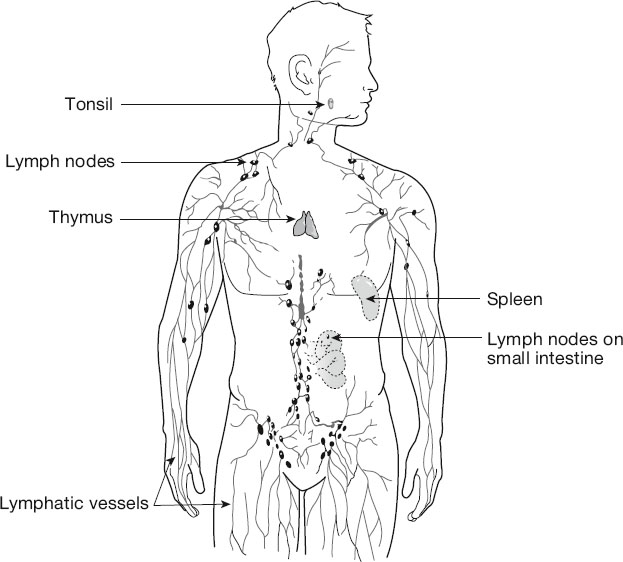
FIGURE 17-1. The lymphatic system (©Alex’s Lemonade Stand Foundation, 2025)
Damage to the spleen and immune system
Much is still not known about immune status and risk of infections in childhood cancer survivors. By far, the best-documented threats to the body’s immune system are removal of the spleen or high-dose (4000 centigray [cGy] or more) radiation to the abdomen. In the past, both of these treatments have been used to treat thousands of children and adolescents with Hodgkin lymphoma. It is not standard treatment today to remove the spleen, although some survivors may have experienced this due to other medical reasons. Patients with solid tumors are also sometimes treated with high-dose radiation to the spleen. In this book, the term asplenia refers to either the absence of the spleen or a spleen that no longer functions after high-dose radiation.
Susceptibility to infection is also a problem for survivors treated for chronic graft-versus-host disease (GVHD) after a stem cell transplant (e.g., bone marrow, cord blood, or peripheral blood). The doses of total body radiation used to prepare children for transplantation do not destroy the spleen, although they do destroy bone marrow function. This is discussed later in the Bone Marrow section of the chapter.
Signs and symptoms of deficient immune system
Susceptibility to viral and bacterial infections is the hallmark of survivors with lowered immunity due to asplenia. These infections can progress rapidly and, in some cases, are life-threatening. Signs and symptoms of infection may vary among survivors, but the most common are as follows:
Fever
Sore throat
Cough
Shortness of breath
Enlarged lymph glands
Fatigue
Chills
Red vesicles that break open, then crust over (i.e., chicken pox)
Red vesicles that travel in lines along the paths of nerves (i.e., shingles)
Screening and detection
Survivors without spleens or with nonfunctional, irradiated spleens need an annual exam that includes a detailed history of infections and illnesses. Methods to screen for and detect infections that require antibiotics and/or hospitalization should be part of a plan that you and your healthcare provider work out.
Medical management
Survivors with asplenia are at increased risk for bacterial infections that overwhelm the immune system very quickly. Infections with certain types of bacteria can become life-threatening in a matter of hours. For this reason, children with asplenia are given daily preventive penicillin (or erythromycin if they are allergic to penicillin) and their parents are told to call the doctor immediately if the child develops a fever of 101°F (38.3°C) or higher. The Children’s Oncology Group’s (COG’s) guidelines recommend that survivors with a temperature above 101°F (38.3°C) be given a long-acting, broad-spectrum antibiotic (e.g., ceftriaxone) and be closely monitored while awaiting the results of blood cultures.
If you are an adult survivor with asplenia, your follow-up program will likely instruct you to call your healthcare provider immediately if you develop a fever higher than 101°F (38.3°C). Because bacterial infections are very dangerous for survivors who have asplenia, you will be prescribed long-acting, broad-spectrum antibiotics even before tests show what type of organism your body is fighting.
You should have a thorough discussion with your primary care provider when you are well about her approach to dealing with patients with asplenia. You should have a plan to follow in case of illness and fever.
For additional information about testing and intervention for asplenia, you and your healthcare provider can refer to the COG’s survivorship guidelines at www.survivorshipguidelines.org. On homepage, under Health Links, see Immune System:Splenic Precautions.
Because fevers can develop any time, such as when you are on vacation or traveling for business, make a plan for dealing with illness when away from home. One way to do this is to carry a wallet card with pertinent information about your history and risk and/or wear a medical alert emblem (see Figure 17-2, Wallet card for patients without a functioning spleen).
The following are additional suggestions for survivors with asplenia:
Get the pneumococcal vaccine (prevents some types of pneumonia)
Get the Hib vaccine (to prevent Hemophilus influenza B)
Get the meningococcal vaccine (to prevent meningitis)
Get the annual flu vaccine
Make sure your healthcare providers know you don’t have a functioning spleen before you have dental work or an invasive procedure such as a colonoscopy
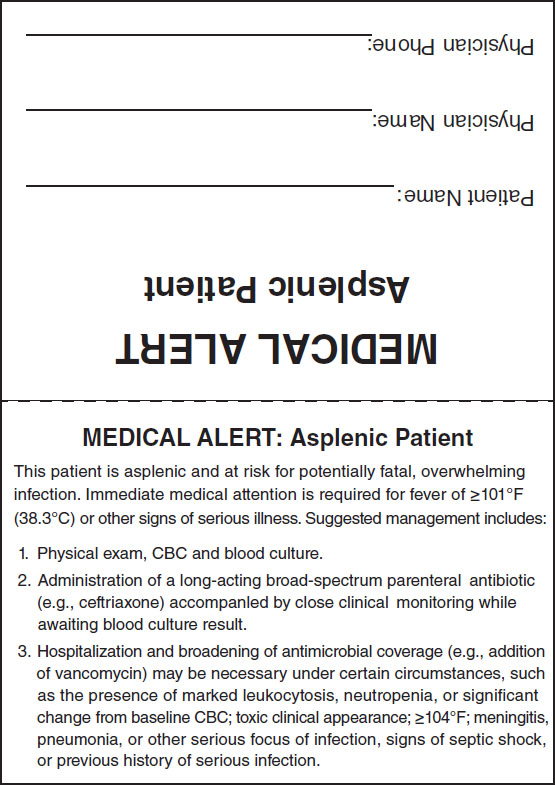
FIGURE 17-2. Wallet medical alert card for patients without a functioning spleen. Source: Long-Term Follow-Up Guidelines for Survivors of Childhood, Adolescent, and Young Adult Cancers, Version 6.0 (October 2023). http://www.survivorshipguidelines.org/ Healthlinks, Immune System: Splenic Precautions.
Table of Contents
All Guides- Acknowledgements
- Contributors
- Foreword
- Preface
- 1. Survivorship
- 2. Emotions
- 3. Relationships
- 4. Navigating The System
- 5. Staying Healthy
- 6. Genetic Testing And Childhood Cancer
- 7. Diseases
- 8. Fatigue
- 9. Brain And Nerves
- 10. Hormone-Producing Glands
- 11. Eyes And Ears
- 12. Head And Neck
- 13. Heart And Blood Vessels
- 14. Lungs
- 15. Kidneys, Bladder, And Genitals
- 16. Liver, Stomach, And Intestines
- 17. Immune System
- 18. Muscles And Bones
- 19. Skin, Breasts, And Hair
- 20. Subsequent Malignancies
- About The Editors