
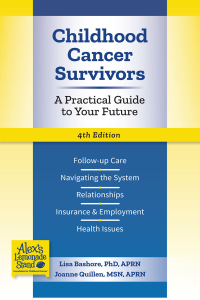
Childhood Cancer Survivors
References
American Cancer Society (2024). Website: www.cancer.org Search, childhood cancer, then late effects of childhood cancer treatment, second cancers
Bhatia S, et al. (2007). Therapy-related myelodysplasia and acute myeloid leukemia after Ewing sarcoma and primitive neuroectodermal tumor of bone: A report from the Children’s Oncology Group. Blood, 109(1): 46–51.
Children’s Oncology Group (V6, Oct 2023). Long-Term Follow-Up Guidelines for Survivors of Childhood, Adolescent, and Young Adult Cancers. Website: www.survivorshipguidelines.org
Dracham CB, Shankar A, Madan R. (2018) Radiation induced secondary malignancies: a review article. Radiat Oncol J. 2018 Jun;36(2):85-94. doi: 10.3857/roj.2018.00290. Epub 2018 Jun 29. PMID: 29983028; PMCID: PMC6074073.
Goshen Y. (2007). High incidence of meningioma in cranial irradiated survivors of childhood acute lymphoblastic leukemia. Pediatr Blood Cancer, 49(3): 294–297.
Indelicato DJ, Bates JE, Mailhot Vega RB, et al. (2021). Second tumor risk in children treated with proton therapy. Pediatric Blood & Cancer, 68(7), e28941-n/a. https://doi.org/10.1002/pbc.28941
Mulder RL, Hudson MM, Bhatia S, et al. (2020). Updated breast cancer surveillance recommendations for female survivors of childhood, adolescent, and young adult cancer from the international guideline harmonization group. Journal of Clinical Oncology, 38(35), 4194-4207. https://doi.org/10.1200/JCO.20.00562
National Cancer Institute, website: https://dceg.cancer.gov, Search research, what-we-study, second-cancers
Smith MA, et al. (1999). Secondary leukemia or myelodysplastic syndrome after treatment with epipodophyllotoxins. J Clin Oncol, 17(2): 569–577.
Table of Contents
All Guides- Acknowledgements
- Contributors
- Foreword
- Preface
- 1. Survivorship
- 2. Emotions
- 3. Relationships
- 4. Navigating The System
- 5. Staying Healthy
- 6. Genetic Testing And Childhood Cancer
- 7. Diseases
- 8. Fatigue
- 9. Brain And Nerves
- 10. Hormone-Producing Glands
- 11. Eyes And Ears
- 12. Head And Neck
- 13. Heart And Blood Vessels
- 14. Lungs
- 15. Kidneys, Bladder, And Genitals
- 16. Liver, Stomach, And Intestines
- 17. Immune System
- 18. Muscles And Bones
- 19. Skin, Breasts, And Hair
- 20. Subsequent Malignancies
- About The Editors