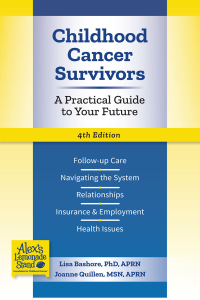
Childhood Cancer Survivors
Glossary
age spots, brown, tan or black spots on the skin a result of frequent sun exposure
alopecia, hair loss
asymmetry, one half of a cancerous spot or mole may not match the other if you were to split the mole in half
dermis, the thick inner layer of the skin
dysplastic nevus (plural: dysplastic nevi), a mole that does not look like a normal mole. It may have uneven edges and be a combination of colors, ranging from pink to dark brown. It may be larger than a normal mole and is typically flat with a surface ranging from smooth to pebbly.
epidermis, a thin outer layer of the skin that is only 10 to 30 cells thick
fibrosis, build-up of scar tissue and loss of elasticity in tissues
fraction, the amount of radiation given at one time
graft-versus-host-disease (GVHD), a frequent complication of allogeneic stem cell transplants, when the bone marrow or stem cells provided by the donor (graft) attack the tissues and organ of the child receiving the transplant (host). GVHD may be acute or chronic. Acute GVHD occurs within the first 100 days after the transplant, while chronic GVHD occurs or persists after day 100.
hematopoietic stem cell transplant (HPSCT), formerly known as bone marrow transplant, involves administering healthy stem cells (e.g., bone marrow, cord blood, or peripheral blood) to patients after the bone marrow has been destroyed by disease, chemotherapy (chemo), or radiation.
hyperpigmentation, patches of skin that are darker than the surrounding skin; can be a result of several conditions: “sun spots” or age spots from frequent sun exposure (brown, tan, or black spots); response to inflammation/injury to the skin; and melasma “the mask of pregnancy” (see melasma definition)
hypoplasia, when an organ or tissue does not develop completely
integumentary system, the body’s largest organ of the body and includes the skin, hair and nails. It is the outer layer of the body and provides a protective covering and defense from the external environment.
melanin, a pigment that gives skin its color
melasma, a harmless skin condition that causes dark patches or spots usually on the face and affects mostly women with darker skin tones. It can occur on chest, upper arms and back and can be triggered by hormones (during pregnancy), sun-exposure, medications, and response to inflammation/injury to the skin.
sebaceous gland, gland in the skin connected to a hair follicle which releases sebum, an oily substance that helps prevent skin from drying out.
stem cell transplant, a procedure that involves administering healthy hematopoietic stem cells (e.g., bone marrow, cord blood, or peripheral blood) to patients after the bone marrow has been destroyed by disease, chemotherapy (chemo), or radiation.
telangiectasia, a skin condition which appears as small red or purple clusters, often spidery in appearance. This commonly appears on the face, nose, chin, and cheeks, but also on the legs, chest, back, and arms.
Table of Contents
All Guides- Acknowledgements
- Contributors
- Foreword
- Preface
- 1. Survivorship
- 2. Emotions
- 3. Relationships
- 4. Navigating The System
- 5. Staying Healthy
- 6. Genetic Testing And Childhood Cancer
- 7. Diseases
- 8. Fatigue
- 9. Brain And Nerves
- 10. Hormone-Producing Glands
- 11. Eyes And Ears
- 12. Head And Neck
- 13. Heart And Blood Vessels
- 14. Lungs
- 15. Kidneys, Bladder, And Genitals
- 16. Liver, Stomach, And Intestines
- 17. Immune System
- 18. Muscles And Bones
- 19. Skin, Breasts, And Hair
- 20. Subsequent Malignancies
- About The Editors