
Childhood Cancer Survivors
Risky Behaviors
Cancer causes some young people to reprioritize their values. During their cancer treatment, they may have spent months or years avoiding crowds, forcing themselves to eat when they weren’t hungry, and fighting for their lives. Some survivors lost friends to the disease and view engaging in risky behaviors as taking a chance with something very precious—one’s life. Others may feel like they spent too much time being sick and separated from normal living and thus more inclined to engage in detrimental behaviors such as smoking (vaping), and excessive drinking or marijuana use.
Some people are cautious by nature and others are adventurous. Survivors of childhood cancer sometimes change their attitudes toward taking risks after treatment ends and begin to engage in risky behaviors and habits such as smoking (vaping), drinking alcohol, not exercising regularly, not eating healthy, and overall, not taking care of their health. This is taking a huge risk for their future health and well-being. The use of alcohol, tobacco, and marijuana can have lasting effects for childhood cancer survivors (Capelli C, Miller KA, Ritt-Olson A et al. 2021).
I am a cautious person. I don’t take risks. I have had to work through my anxiety to be able to get things done. I didn’t get my driver’s license until I was 22 years old. I still have stress dreams about running through red lights or crashing my car, but I get up and drive every day because I know that it’s a safe thing for me to do, and I wouldn’t be doing something if it wasn’t OK.
I prioritized doing things that made me feel alive –not the best things for my health. I was doing whatever made me feel good. I am a stallion in my brain trapped in a sick person’s body. I used substances for a while during/after college. Not only was I going through cancer, but my whole family was going through it, so I was just living on the wild side.
I am definitely more likely to take risks. I have learned very early on in my life that life is short, and I am definitely more willing to go on adventures, especially trips. I think living in the moment is so important, and I try to always say “yes” to everything at least once. I may not like everything I try, but I won’t know how I feel until I try it.
Risk of smoking/vaping
Smoking (which may include vaping) remains the most preventable cause of mortality in the United States. Smoking negatively affects all body organs including the heart, lungs, head and neck, and sexual function to name several. Engaging in smoking/vaping or the use of mood-altering drugs like marijuana may place survivors at increased risk for serious health problems, such as cancer and heart disease because of the treatments they received (https://www.cancer.org). See Resources for specific website.
Almost half a million people in the United States die each year from tobacco-related illnesses such as cancer of the lung, mouth, neck, esophagus, bladder, and pancreas. Another 16 million live with serious illness caused by smoking (https://www.cdc.gov/tobacco/index.html). Many adults no longer smoke or chew tobacco-containing products because of health warnings on packages, increased awareness of the dangers, and increased costs associated with these risk-taking behaviors.
One component of good follow-up care is education about the effects of tobacco use. Part of the discussion should focus on your increased risks of developing cancer after using tobacco. For instance, if you were treated with the drugs bleomycin, carmustine (BCNU), or lomustine (CCNU) and/or had chest radiation, you have an increased risk of lung problems. It is very dangerous to smoke if your lungs might already be damaged from these drugs or radiation. Smoking/vaping (including marijuana) and taking pills are also sometimes used as a self-medication for depression. If you think depression may be the reason you smoke, you need to get information, and seek treatment for the underlying depression from a licensed health provider.
Survivors of childhood cancer should not smoke or vape because of their risk of cardiac problems, premature emphysema, lung fibrosis (scarring), and increased risk for second cancers. But many survivors do smoke. This is not surprising that survivors smoke, given that more than a million adolescents and pre-adolescents start smoking every year (https://www.cancer.org/cancer).
E-cigarettes and other similar vaping devices
This is a quote of facts regarding e-cigarettes and other vaping devices from the American Cancer Society’s research and study:
E-cigarettes and other types of ‘vaping’ devices are still fairly new, and more research is needed over a longer period of time to know what the long-term health effects may be. Research on these devices is complicated by the fact that many different devices are being sold, and many different chemicals can be used in them.
The most important points to know are that the long-term effects of e-cigarettes are still unknown, and all tobacco products, including e-cigarettes, can pose health risks to the user. For example, e-cigarettes can irritate the lungs and can have negative effects on the heart.
Learn about the dangers of smoking at the American Cancer Society website: www.cancer.org/cancer/risk-prevention/tobacco Search, Health Risks of Smoking.
If you don’t smoke or vape, don’t start. If you smoke or vape, try to stop.
By smoking/vaping, you may be causing more damage to your body than all of the surgeries, radiation, and chemotherapy you had to treat your cancer. The one thing you can do that will make the biggest difference in your health is to stop smoking (including vaping). See Figure 5-2. Ask for help from your follow-up clinic or a healthcare provider.
You can find motivation and tips about how to stop smoking at www.smokefree.gov and in Resources at the end of this chapter. It is very important to remember that no matter how long you have smoked, you can always improve your health by stopping.
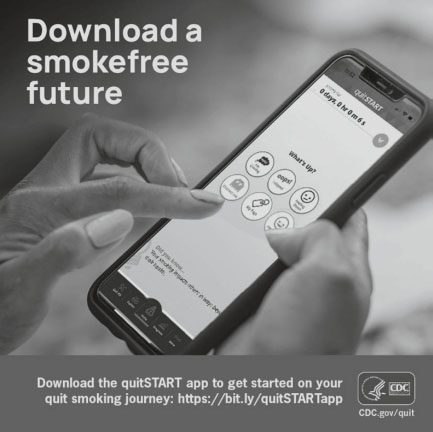
FIGURE 5-2. Download the quitSTART app to get started on your quit smoking journey. It can help you create a quit plan, find tips to help you quit smoking, manage cravings, and more! Website: https://bit.ly/quitSTARTapp
I don’t smoke anything--cigarettes, weed, vapes, etc. It bothers me when people do, because I had friends who couldn’t breathe at the end of their lives, and it seems so unfair. I will never smoke, and it would be a big red flag for a future friend or partner.
I don’t drink alcohol. Health reasons are part of that, because I know that heart and liver health are affected by alcohol. I also just don’t really like the taste of alcohol, in any form. I have a weird theory that I link the smell of alcohol to the hospital and the alcohol wipes before blood draws, so maybe that makes a difference. A big part is that I’m freaked out by the idea of being drunk and not being “in control” of my body. I think being a patient and not getting a say in what happens to your body had a big impact on me, so I’m scared at the thought of not being fully in control of what I do or say.
As a teenager and college student, I was involved with the smoking and drinking lifestyle for a while. It is something I am not proud of, but after doing research and getting advice from doctors, I have stopped smoking (vaping). It does feel like a weight lifted off my shoulders, knowing I am doing something to help myself and my overall health.
As an adult, I don’t think my childhood cancer impacted my experience with alcohol at all. When I drink with friends that did not have cancer, I do not find that they are overly cautious around me or that I have issues “keeping up” with them. I’m just like any regular person, and cancer hasn’t impacted this part of my life at all.
* The use/publication of figures/images in this book taken from the CDC website does not indicate endorsement or accuracy of content presented in this book by the CDC or US government. These images are considered in public domain and can be used for educational purposes in electronic and print media. Click the links below images which directs you to specific CDC webpages for more information.
Risk of excessive alcohol
When used in moderation (one drink or less a day), alcohol can be part of a healthy life. Many adults enjoy a glass of wine with meals or with friends. However, alcohol is often abused causing both physical and emotional problems to survivors and their families.
Alcohol is a depressant that affects the central nervous system. Just two beers or drinks can impair coordination and thinking. Excessive drinking can cause liver damage and increase your risk of mouth and liver cancer. This number of drinks can also cause high blood pressure, stroke, decreased fertility, and miscarriages in women. If you drink at all while pregnant, your baby can be harmed. Drinking beer produces the same results as drinking wine or liquor. One beer contains the same amount of alcohol as a glass of wine or a shot (ounce) of hard liquor. Binge drinking (periods of excessive drinking followed by periods of no drinking, for example, drinking excessively only on weekends) is just as dangerous to your body as daily, heavy drinking. Binge drinking is especially prevalent in high schools and on college campuses. Rather than being swayed by peer pressure to engage in drinking parties or activities, avoid them altogether or think of strategies ahead of time to avoid excessive drinking. You could drink a soft drink at parties instead of alcohol or sip one weak to lower-containing alcoholic drink throughout the entire evening.
Although a daily glass of wine may slightly lower the risk of heart disease, there are better ways to accomplish this such as regular exercise, eating less fat, and maintaining a normal weight. Survivors of childhood cancer may already have damaged organs side-effects of radiation or chemotherapy treatments. Excessive alcohol can increase that damage. In addition, if you are infected with the hepatitis C virus, you should not drink any alcohol.
To get help for problem drinking, join Alcoholics Anonymous® (to find a meeting near you visit www.aa.org) and talk with your healthcare provider.
Sexually transmitted illnesses
As with all adolescents and young adults, cancer survivors should be counseled about safe sexual practices. Despite the many sexual messages in our culture, most adolescents are not well informed about the facts. Many survivors think, erroneously, that if they are infertile, there is no reason to use condoms. However, there are many diseases, some potentially fatal (e.g., hepatitis C, Acquired Immune Deficiency Syndrome [AIDS])) and some life-altering (e.g., genital herpes, genital warts, gonorrhea) that can be transmitted through sexual activity. Condoms can help prevent transmission of these diseases. Sexually transmitted illnesses can also reduce fertility.
I always use sunscreen whenever outside. I certainly don’t want to deal with something as preventable as skin cancer due to sun exposure. I take care of my skin and apply sunscreen when needed. I take this very seriously and believe everyone should, not just cancer survivors.
I am very careful about sun exposure. I’m already very pale, so I would have used sunscreen even without my cancer history, but I’m especially diligent because I know the risks. I use SPF 50+ and reapply at least every 2 hours. I normally do get burned at least once a year, because I do burn so easily, but I’ve only had a handful of severe burns in my life.
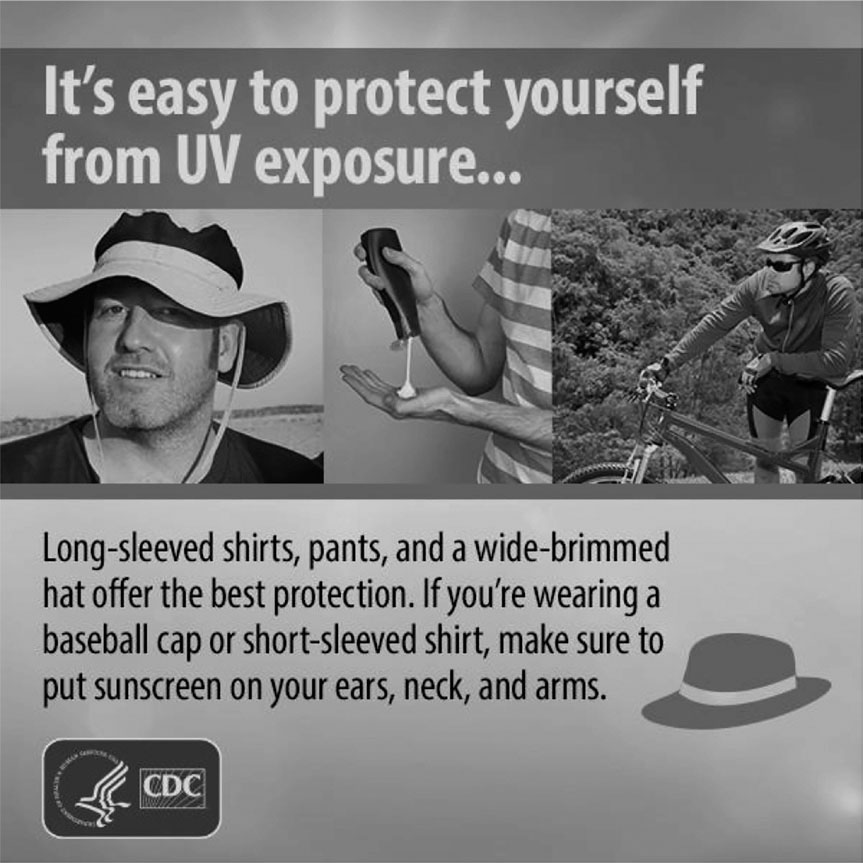
FIGURE 5-3. Use sunscreen of at least 30 SPF to protect yourself from damaging UV rays. Source: https://www.cdc.gov/cancer/features/skin-cancer.html
A public health graphic from the CDC with the headline “It’s easy to protect yourself from UV exposure…” displayed at the top. Below the headline are three photos: one showing a person wearing a wide-brimmed hat, another showing sunscreen being applied to an arm, and a third showing a cyclist wearing protective gear outdoors. At the bottom, the text advises: “Long-sleeved shirts, pants, and a wide-brimmed hat offer the best protection. If you’re wearing a baseball cap or short-sleeved shirt, make sure to put sunscreen on your ears, neck, and arms.” A gray hat icon appears on the right side, and the CDC logo is in the lower-left corner.
Sun exposure can cause skin cancer and cataracts
Skin cancer is very common, but the likelihood of getting it is somewhat under your control. Most skin cancers are caused by exposure to the sun. A lifetime of tans and burns increases your cancer risk and can also cause wrinkles and brown spots on your skin.
Hazards of overexposure to the sun include:
Skin cancer. The risk of skin cancer increases the more your skin is exposed to sunlight or UV (ultraviolet) light from sun lamps, especially in areas that have been exposed to radiation. Most skin cancers can be removed, but many can be life-threatening if not diagnosed and treated early.
Sunburns. These can occur to both skin and eyes.
Premature skin aging. Years of overexposure to the sun can result in dry, wrinkled, and leathery skin.
Cataracts. The risk of developing cataracts is increased by long-term exposure to the sun’s UVB (ultraviolet B) rays.
* The use/publication of figures/images in this book taken from the CDC website does not indicate endorsement or accuracy of content presented in this book by the CDC or US government. These images are considered in public domain and can be used for educational purposes in electronic and print media. Click the links below images which directs you to specific CDC webpages for more information.
Skin cancer and sun protection
Those at highest risk for damage from the sun are people with fair skin, blond or red hair, and blue eyes. However, anyone can be damaged by too much exposure to the sun or to the lights used in tanning beds or booths. In addition, any skin that has been irradiated is at risk for developing skin cancer. You can prevent these problems by:
Limiting the amount of time you are in the sun, especially during the middle of the day. The sun’s rays are strongest between 10 am and 2 pm. If your shadow is shorter than you are, seek shade. Sun exposure at high altitudes and in places near the equator increases your exposure to harmful rays.
Wearing sunscreen with an SPF (sun protective factor) of 30 or higher (American Academy of Dermatology, https://www.aad.org/media/stats-sunscreen). It should be applied at least 30 minutes before going outdoors and reapplied every 2 hours regularly throughout the day. (See Figure 5-3) Sunscreen must be worn on cool or cloudy days, especially if you are around snow, sand or water that reflect the sun’s rays. If you have acne, use an alcohol-based and non-waterproof product.
Covering your skin (especially areas that have been irradiated) with clothing, sunglasses, or hats
Avoiding tanning beds or tanning booths which use ultraviolet A light that damages the skin.
Some medicines, foods, and cosmetics may increase your sensitivity to sunlight.
When you use sunscreen, you may not absorb enough vitamin D. It is a good idea to make sure you take a vitamin D supplement based on a registered dietitian consultation.
Monitor irradiated areas of skin and moles
Routinely check any areas of skin that were irradiated and ask someone else to check areas you can’t see well, such as on your back. If you have numerous moles, see a dermatologist on a regular basis to monitor for any signs of possible cancer. If you develop any of the following symptoms, bring them immediately to the attention of your healthcare provider:
A bump or mole that has different colors rather than being a uniform color
A bump or mole that changes size or bleeds
A bump or mole that is red or sore
Any freckling or color changes in the skin
Table of Contents
All Guides- Acknowledgements
- Contributors
- Foreword
- Preface
- 1. Survivorship
- 2. Emotions
- 3. Relationships
- 4. Navigating The System
- 5. Staying Healthy
- 6. Genetic Testing And Childhood Cancer
- 7. Diseases
- 8. Fatigue
- 9. Brain And Nerves
- 10. Hormone-Producing Glands
- 11. Eyes And Ears
- 12. Head And Neck
- 13. Heart And Blood Vessels
- 14. Lungs
- 15. Kidneys, Bladder, And Genitals
- 16. Liver, Stomach, And Intestines
- 17. Immune System
- 18. Muscles And Bones
- 19. Skin, Breasts, And Hair
- 20. Subsequent Malignancies
- About The Editors