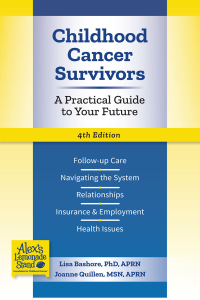
Childhood Cancer Survivors
Emotional Expression And Health
Emotions—of all kinds—are inevitably part of experiencing cancer, its treatment, and survivorship. Being able to recognize feelings and find healthy ways of expressing, channeling, and learning from them are keys to creating a balanced life. Not having tools for managing emotions can make life more difficult.
Research has shown that survivors with high levels of psychological distress are more likely to engage in risky health behaviors such as substance use and abuse (Ji X, 2021 and De R, 2020). Unhealthy habits may complicate and worsen late effects from cancer treatment. So, in addition to the value of seeking support from healthcare professionals and networks of people with similar experiences, some other available tools for dealing with strong emotions include blogging or journaling, physical activity, meditation, and yoga, among others. Chapter 5, Staying Healthy, includes more information about this topic.
All of our family receives professional help to deal with our daughter’s cancer journey. There is no shame in discussing our experiences with an outside party. Our daughter has many mental health issues due to her cancer diagnosis and treatment. Some of these include anxiety, fears, big emotions, and reverting back to immature behaviors similar to those of a toddler.
I think about my daughter’s time in treatment all the time. Things that happen change you as a person and you live with that. Seeing your child suffer continuously, come close to the brink of death, and then survive has a profound impact on your emotions. At least for me, the hurt and pain of that time does not leave you, although things do get better. When you run on adrenaline, lack of sleep, poor eating habits, and caring for another child, you do experience PTSD. Even once treatment is complete, the fear and anxiety each time your child has tests or scans can be debilitating. The silver lining of that time in my life is that you get to see the good in people, in medical professionals, and in your community.
Table of Contents
All Guides- Acknowledgements
- Contributors
- Foreword
- Preface
- 1. Survivorship
- 2. Emotions
- 3. Relationships
- 4. Navigating The System
- 5. Staying Healthy
- 6. Genetic Testing And Childhood Cancer
- 7. Diseases
- 8. Fatigue
- 9. Brain And Nerves
- 10. Hormone-Producing Glands
- 11. Eyes And Ears
- 12. Head And Neck
- 13. Heart And Blood Vessels
- 14. Lungs
- 15. Kidneys, Bladder, And Genitals
- 16. Liver, Stomach, And Intestines
- 17. Immune System
- 18. Muscles And Bones
- 19. Skin, Breasts, And Hair
- 20. Subsequent Malignancies
- About The Editors