
The ear, the organ of hearing, is made up of three main parts: external, middle, and inner ear. The external ear includes the outer portion (auricle) and the external auditory canal. The middle ear is a cavity separated from the external ear by the eardrum and contains three small bones. The inner ear contains the cochlea (which is responsible for hearing), the vestibule (which senses position in space and motion), and the semicircular canals (which control equilibrium). Figure 11-2 shows the anatomy of the ear.
Ear damage
Ears and hearing can be damaged by chemotherapy, high-dose radiation, and some antibiotics.
Chemotherapy
Some anticancer drugs, primarily cisplatin, can cause substantial hearing loss in the high- to ultra-high-frequency range—6,000 to 12,000 Hertz (Hz). The degree of hearing loss is greater in younger children and those who receive higher cumulative doses of cisplatin. If more damage occurs, the lower frequencies also can be affected. Carboplatin is also associated with hearing loss but to a much lesser degree. Radiation to the head can intensify the hearing loss from cisplatin.
The damage generally occurs in both ears and is irreversible. Sometimes ringing in the ears (tinnitus) or a sensation of drifting in space or having objects drift around you (vertigo) can also occur. Children most at risk for chemotherapy-caused hearing loss are those treated for brain tumors, germ cell tumors, osteosarcoma, and neuroblastoma.
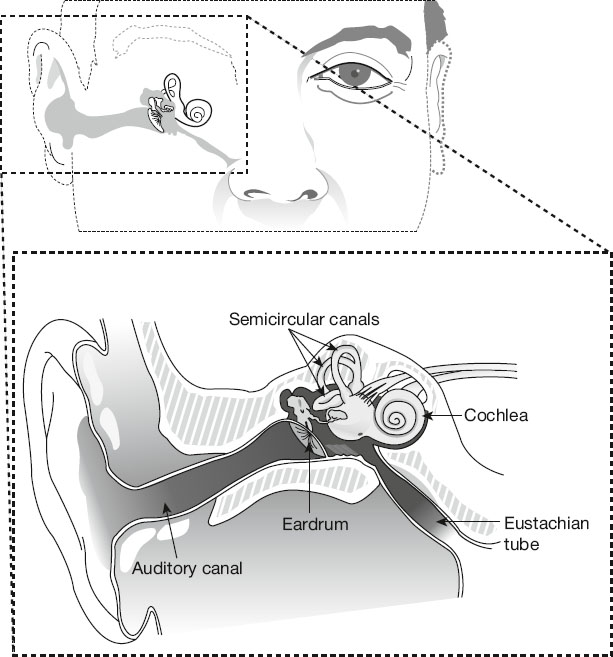
FIGURE 11-2. Anatomy of the ear. (©Alexʼs Lemonade Stand Foundation, 2025)
A detailed anatomical diagram of the human ear, focusing on its internal structure. It shows the outer ear leading into the auditory canal, which connects to the eardrum. Beyond the eardrum, the middle ear structures are illustrated, including the ossicles, and the diagram highlights the Eustachian tube extending downward. The inner ear is depicted with the cochlea, a spiral-shaped organ responsible for hearing. Arrows and labels clearly identify the auditory canal, eardrum, cochlea, and Eustachian tube.
Radiation
Survivors who had head and neck tumors treated with higher doses of radiation often develop hearing loss.
The most common diseases treated with high-dose radiation that can affect the ears:
Nasopharyngeal carcinomas
Other soft tissues around the ear (rhabdomyosarcoma)
Parameningeal sarcomas
Brain stem gliomas
Medulloblastomas
Ependymomas
Children treated with less than 2400 cGy of cranial radiation (e.g., for leukemia or prior to stem cell transplantation) rarely develop any late effects in the ears.
Outer ear infections, which are common after high-dose radiation, can impair hearing by drying out and thickening the external ear canal and eardrum. Chronic middle ear infections (otitis media) can also be caused by radiation due to damage to the eustachian tube which is responsible for drainage of the middle ear. When the eustachian tube cannot drain properly, middle ear infections can become chronic.
The glands that produce earwax (cerumen glands) may produce less wax, and earwax that is produced sometimes becomes crusty and impacted. While the earwax is impacted, hearing is decreased and trapped moisture can increase the risk for ear infections. This late effect can also occur in survivors who developed graft-versus-host disease after stem cell transplantation. Impacted earwax can be removed by your healthcare provider. It is strongly discouraged to use cotton-tipped applicators or other objects in the ear canal because they can actually push impacted earwax further into the ear canal.
Risk factors for permanent hearing loss in children/teens treated for cancer:
Treatment with cisplatin, and to a lesser extent, carboplatin
High doses of radiation to the head and/or neck
Younger age at time of treatment
Surgery involving the ear, brain, or auditory nerve
Treatment with certain antibiotics such as gentamicin (generally used for serious infections or fever when blood counts are low)
Chronic ear infection
Treatment with diuretics (drugs that help the body get rid of excess water)
Poor kidney function
Signs and symptoms of hearing loss
Hearing loss should be suspected if your child has any of the following symptoms:
Does not startle or respond to loud noises
Does not respond to your voice consistently
Has a hard time understanding or following directions after age 3
Does not have clear speech
Fails to develop sounds or words that are appropriate for their age
Uses gestures instead of words
Lesser signs and symptoms of hearing loss which are typically associated with chemotherapy but should be suspected if your child:
Confuses like-sounding words
Drops sounds off words or reports not hearing sounds such as th, f, sh, s, t, k, g, ch, and v
Reports (s)he can hear but not understand words and speech
Has difficulty hearing in noisy situations or environments
Any parents who have a concern regarding their child’s hearing and notice any of the above symptoms, should have the child’s hearing evaluated by an audiologist.
School-aged children who have lost some hearing may withdraw socially or have trouble in school. They may also describe ringing in their ears or dizziness.
Follow-up screening and detection for ear damage
After treatment ends, appointments at the follow-up clinic should include an ear examination to look for infection, wax buildup, and eardrum perforation or scarring. Survivors should also have their hearing tested periodically following completion of treatment, because chemotherapy can have an impact on hearing up to 5 years after completion of the last round. Healthcare providers of survivors who had head or brain radiation may recommend periodic hearing tests because hearing problems can also sometimes develop several years after radiation. Anyone with abnormal test results should be referred to an audiologist or otolaryngologist (ear, nose, and throat doctor) for a thorough evaluation to determine whether assistive technology would be helpful.
The most widely used method to test the hearing of children with cancer is pure tone audiometry. These tests should be administered by an experienced pediatric audiologist. Extended high-frequency audiometry may be used to test for hearing loss in the high-frequency range (4,000 to 20,000 Hz). This is especially important for younger children with limited language because many consonants (th, f, p, s) are in this range. If a child cannot hear these consonants it may be very hard to acquire clear speech, so early intervention can make an important difference. Children at risk for hearing loss should also be tested for speech and language disorders.
For more information, see American Speech and Hearing Association website in Resources at the end of the chapter.
My daughter suffered hearing loss as was expected. We did not have a lot of support for that during her school years. At the time, we were feeling relieved to survive a life-threatening situation, and the hearing loss seems like a minor challenge. Unfortunately, as school began, we realized the hearing loss was a huge problem and not just for learning but for her social development. It really caused her to feel isolated and left her feeling shy and excluded a lot of the time. I wish that I had known more, explored options and done more in terms of getting her support at that time, but I have learned I cannot go back and not to beat myself up about that.
Medical management of ear damage
Medical management includes treating middle or external ear infections, and in some cases, placing tubes in the ears. Survivors with tinnitus (ringing in the ears) may benefit from intervention and should be evaluated by an audiologist or otolaryngologist. State-of-the-art hearing aids are needed for those with permanent hearing impairment. Newer digital technology can minimize background noise and maximize speech sounds, unlike hearing aids of the past. Proper fitting and follow-up testing are crucial. It is also important to develop a routine for maintaining the aids, cleaning the ear molds and replacing the batteries. Ear molds will need to be replaced periodically. An alert that hearing aids need to be checked is if you hear feedback or high-pitched noise from the hearing aids. They should be taken to the audiologist to be checked.
For those with profound hearing loss, fostering language development with speech reading and signing is vital. Using the closed captioning while watching television can also be helpful. Coping with the emotional and psychological effects of hearing loss in children and teens is an essential component of care.
Educators sometimes need the support and direction of medical caregivers. For instance, an FM system (a special type of assistive listening device) can be used by hearing-impaired children in school to amplify the teacher’s voice. The teacher wears a microphone that transmits the voice via radio waves to a receiver that can be attached to the child’s hearing aids, in a speaker mounted in the classroom, or to a personal speaker on the child’s desk. Your child’s healthcare provider should give you detailed information about educational regulations for young people with hearing loss. For more information about education, see Chapter 4, Navigating the System.
The American Academy of Audiology offers information about hearing loss on the consumer website at www.howsyourhearing.org. In addition, the Children’s Oncology Group’s survivorship guidelines include an informational resource about hearing loss at www.survivorshipguidelines.org. See list of all Resources at the end of the chapter.
Table of Contents
All Guides- Acknowledgements
- Contributors
- Foreword
- Preface
- 1. Survivorship
- 2. Emotions
- 3. Relationships
- 4. Navigating The System
- 5. Staying Healthy
- 6. Genetic Testing And Childhood Cancer
- 7. Diseases
- 8. Fatigue
- 9. Brain And Nerves
- 10. Hormone-Producing Glands
- 11. Eyes And Ears
- 12. Head And Neck
- 13. Heart And Blood Vessels
- 14. Lungs
- 15. Kidneys, Bladder, And Genitals
- 16. Liver, Stomach, And Intestines
- 17. Immune System
- 18. Muscles And Bones
- 19. Skin, Breasts, And Hair
- 20. Subsequent Malignancies
- About The Editors