

Childhood Cancer Survivors
Hypothalamic-Pituitary Axis (Hpa)
The hypothalamus and the pituitary gland (hypothalamic-pituitary axis) are located deep in the brain and are connected by a stalk. The hypothalamus and pituitary work together to control all the other glands in the endocrine system. The hypothalamus—often called the master gland—produces substances that tell the pituitary to release or stop releasing hormones.
The hypothalamus-pituitary axis (HPA) works somewhat like a thermostat. It is programmed to secrete specific hormones under certain conditions and continues to do so until receiving a message to shut off secretions (a feedback loop). For example, assume that the thermostat in your home is set at 70°. When the room temperature drops below 70°, the thermostat turns on the heater. The heater continues to run until the room reaches a preset temperature set in the thermostat (for example, 73°), and then the thermostat turns off the heater.

FIGURE 10-1. Male and female glands of endocrine system. (©Alexʼs Lemonade Stand Foundation, 2025)
An example of this feedback loop system in the body is when puberty begins. When a girl reaches the age of puberty, the hypothalamus releases GnRH (gonadotropin-releasing hormone), which stimulates the pituitary to release FSH (follicle-stimulating hormone) and LH (luteinizing hormone). These hormones released start the development of the female ovaries. When the ovaries begin to mature and release hormones (estrogen and progesterone), the loop is complete, and puberty proceeds normally. If, however, the prepubescent girl received high-dose abdominal radiation, the LH and FSH are released, but the damaged ovaries do not respond. The HPA keeps pouring out LH and FSH to start puberty, but the loop is never connected, and the system never turns on. In this example, the girl would have high FSH and LH, but no estrogen and thus she would not begin puberty. Table 10-1 shows hormones/substances each organ produces and their function in the body.
Damage to hypothalamus and pituitary gland
The hypothalamus and the pituitary gland are not normally damaged by chemotherapy. But abnormalities occur after radiation to the brain, face, or neck. The pituitary gland can tolerate higher doses of radiation. The hypothalamus is more delicate and can be affected by doses as low as 1800 to 2000 cGy, but each survivor is different. The amount of damage depends on total dose, method (proton; photon) used to deliver radiation, and age of the child when irradiated.
Growth hormone deficiency is the most common problem after radiation to the HPA. It is often not immediately obvious and tends to worsen over time. The survivors most affected by damage to the HPA are those who were treated for brain tumors. Almost all younger children treated with more than 3000 cGy to the brain experience growth disruptions.
Survivors whose growth is most likely to be affected are:
Survivors of childhood brain tumors
Surgery in the area near the HPA and high doses of radiation can both cause severe growth impairment
Children exposed to radiation to the brain; the younger the age when irradiated, the more severe the effect on height
Children who had spinal radiation (see Chapter 18, Muscles and Bones)
Children who were treated with total body radiation prior to a hematopoietic stem cell transplant (this term includes bone marrow transplants). A single high dose of radiation causes more problems than radiation given in smaller doses. Children (especially girls) who enter puberty before age 8 (precocious puberty) are at the highest risk.
Table 10-1. Hormones in the hypothalamic-pituitary axis and functions |
||
|---|---|---|
Hypothalamus Hormone |
Pituitary Hormone |
Function |
Thyrotropin-releasing hormone (TRH) |
Thyroid-stimulating hormone (TSH, also called thyrotropin) |
Stimulates thyroid growth and secretion |
Growth hormone-releasing hormone (GHRH) |
Growth hormone (GH) |
Increases body growth, muscle strength, energy, cognitive development |
Gonadotropin-releasing hormone (GnRH) |
Follicle-stimulating hormone (FSH) |
Females: stimulates growth of ovarian follicles and female hormones Males: stimulates sperm production |
Gonadotropin-releasing hormone (GnRH) |
Luteinizing hormone (LH) |
Females: stimulates ovulation and female hormones Males: stimulates testosterone production |
Corticotropin-releasing hormone (CRH) |
Adrenocorticotrophic hormone (ACTH) |
Stimulates adrenal growth and secretions that help the body respond to emotions (especially stress) |
None |
Antidiuretic hormone (ADH or vasopressin) |
Reduces the volume of urine |
Prolactin-releasing factor Prolactin release-inhibiting factor |
Prolactin |
Regulates breast development and milk production in females |
Short stature. An early linear growth spurt combined with sexual maturation can also result in short stature. Short stature occurs because the bones stop growing when sexual maturity is reached. When this happens at a young age, the child loses 2 or 3 years of additional growth.
Hormonal abnormalities. Children or adolescents who received high-dose radiation (more than 3000 cGy) to the area of the hypothalamus and pituitary often develop a variety of hormonal abnormalities. They are at risk for growth hormone deficiencies, early sexual development, deficiencies in production of LH, FSH, adrenocorticotrophic hormone (ACTH), and thyroid-stimulating hormone (TSH); and may produce too much prolactin. These problems may develop years after treatment, so these survivors need long-term endocrine follow-up.
Although this chapter describes each of these problems separately, survivors often have combinations of endocrine problems. There are numerous other problems from damage to the HPA that do not directly involve growth. These rare problems are listed below.
Puberty was certainly stunted for me. I was baby-faced until my sophomore year of high school, and I didn’t begin to hit puberty until I was 15. My younger brother, who was a year and a half younger, went through puberty at essentially the same time I did, the only difference being he was in middle school. It was difficult at times, having a higher voice than all my peers and not really filling out my body until I was well into high school, but my peers seemed very understanding. This was slightly difficult to deal with in sports because other boys my age were getting taller and stronger than I was. In the end, everything worked out. Just remember that although puberty can be more challenging as a survivor, you will get through it eventually!
Rare problems that can occur from damage to HPA:
Hyperprolactinemia (higher levels of prolactin in the blood) can occur in children who receive more than 3000 cGy to the HPA. In females, prolactin is involved in breast development when there is adequate estrogen, progesterone, and growth hormone. Adolescents or women with too much prolactin stop having periods. Men who produce too much prolactin may have a lower sexual drive.
Panhypopituitary dysfunction is when the pituitary gland does not make one or more hormones or does not make enough. It is a complication in children with brain tumors who get much higher doses of radiation to the HPA and replacement hormones may be needed.
Signs and symptoms of damage to the HPA
Signs and symptoms of damage to the HPA can take many forms. Common late effects are decreased growth, early or late puberty, and low levels of LH and FSH hormones.
Decreased growth. Decreased growth is a common problem for all children and adolescents on therapy for cancer. Many children experience catch-up linear growth after their cancer treatment ends. A few survivors continue to have slowed growth long after therapy ends. The symptoms may vary among children but may include:
Significant changes in the growth percentiles (e.g., a child who used to be in the 90th percentile who is now in the 50th percentile)
Below normal sitting height
Growth hormone deficiency (GHD), a rare condition in which the body does not make enough growth hormone (GH) that controls children’s growth
Early (precocious) puberty. Precocious puberty can occur in children who were treated with cranial radiation.
Signs and symptoms of precocious puberty are:
Physical signs of puberty in girls (e.g., breast development, underarm hair, body odor) before the age of 8
Physical signs of puberty in boys (e.g., testicular enlargement, development of the penis, underarm hair, facial hair) before the age of 9 years
Growth hormone deficiency
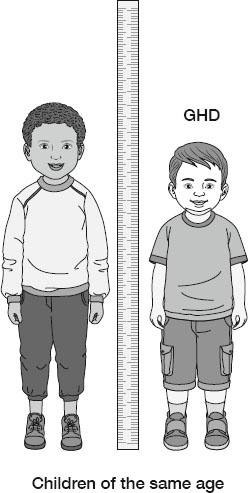
FIGURE 10-2. Growth hormone deficiency (GHD) causes decreased or slow growth (©Alexʼs Lemonade Stand Foundation, 2025)
Late puberty. Puberty can also be delayed by treatment for childhood cancer. Normally, puberty begins by age 13 in girls and 14 in boys. However, if hormones produced by the pituitary (LH and FSH) are disrupted or decreased by treatment, girls and boys may not start puberty at the normal time.
Signs and symptoms of delayed puberty are:
No signs of sexual maturation in girls (e.g., breast development, underarm hair, body odor) by age 13 years
No signs of sexual maturation in boys, including underarm hair, deepening voice, and penial development by age 15 years
Children who are shorter than their peers because they have not experienced a pubertal growth spurt.
Abnormal LH and FSH hormone levels. See Table 10-2 for signs of abnormal LH/FSH levels in both females and males.
Table 10-2. Signs of abnormal LH/FSH hormone levels |
|
|---|---|
Outcomes of abnormal LH/FSH hormone levels during or after puberty |
|
Females |
Males |
Puberty stops |
Puberty stops |
Menstruation stops |
Soft, small testicles |
Changes in menstruation: |
Low/absent sperm count |
• duration/frequency |
Changes in: |
• other unusual changes |
• libido |
• sexual performance |
|
Signs of low estrogen: |
|
• hot flashes |
|
• vaginal dryness |
|
• low libido |
|
• sleep problems |
|
• painful intercourse |
|
• infertility |
|
LH, luteinizing hormone; FSH, follicle-stimulating hormone |
|
Screening and detection of damage to the HPA
Growth failure. Any child or adolescent who had radiation to the brain should be carefully screened for growth failure. A healthcare provider should measure standing height and plot it on a growth chart (graph that indicates if a child is growing normally for age) every 6 months. Sitting heights should also be obtained for any survivor who had radiation to the spine (i.e., total body radiation, mantle, spinal). The heights should be analyzed in light of the child’s pre-cancer growth, current bone age (determined from a hand x-ray), stage of puberty, and height of parents.
Healthcare providers (specifically endocrinologists) should discuss the signs and symptoms of HPA damage with survivors at risk and their parents (or older survivors) and complete a thorough yearly evaluation.
Any child who, after treatment, is growing slowly (i.e., less than 2 inches a year) or is in the fifth percentile or below for height should have additional tests:
Bone age (measures the maturation of bones in the hand)
Thyroid function tests
Somatomedin-C (IGF1) and IGFBP3 (blood tests that measure the amount of hormone available to support normal growth)
Bloodwork to check on the functioning of other major organs. All children with growth concerns should be referred to a pediatric endocrinologist.
Puberty status. All children should be evaluated for puberty status after radiation to the HPA, regardless of age. Any child who appears to be entering precocious puberty should have a bone age (x-ray of the hand) and GnRH testing done. Most facilities also test growth hormones in any child who appears to be entering precocious puberty because the two problems—slowed growth and early puberty tend to occur together. Children entering precocious puberty should be referred to a pediatric endocrinologist with experience treating survivors of childhood cancer. If your follow-up facility does not have such a specialist, you can find list of pediatric endocrinologists across the US at website: https://pedsendo.org and Search: Patient resources, Find a pediatric endocrinologist.
Some adolescents do not begin puberty at the normal age and need comprehensive evaluation by a pediatric endocrinologist that includes bone age, LH and FSH levels, testosterone or estradiol (estrogen) levels, and thyroid function tests for those who had high levels of radiation (of at least 3000 cGy) to the HPA. Consult an endocrinologist for further testing needs.
Medical management of damage to HPA
Healthcare providers (specifically endocrinologists) should discuss the signs and symptoms of HPA damage with survivors at risk and their parents (or older survivors) and complete a thorough yearly evaluation.
The following are the current methods used by most survivorship clinics to treat HPA problems:
GH deficiency. Replacement GH is given in a daily injection (shot).
Low LH and FSH. Females who produce no LH or FSH are usually treated with estrogen and synthetic progesterone (progestin). Adolescents and women with partial deficiencies may require only monthly progestin therapy to cause a period. Males with low LH are given sustained-release testosterone (through an injection into the muscle every 2 to 4 weeks, a daily patch on the skin, or in a cream).
Precocious puberty. The drug Lupron® is given through a monthly or every three (3) month injection into the muscle to stop puberty until the time it should begin. Another medication, Supprelin is an implant placed just under the skin. Replacement GH and GHRH are given if the child also has low GH. Speak with your own health care provider about these options.
Hyperprolactinemia (too much prolactin). This condition is treated with bromocriptine or a related medication.
Reevaluate after adult growth height reached to determine future treatment
Children who are growth hormone deficient should be evaluated again once they have achieved their adult height to determine if they require adult growth hormone replacement. Growth hormones affect many things other than growth, such as fat-to-muscle ratio, bone density, mood, cognitive function, and heart health. The criteria for receiving growth hormone in adulthood are stringent. Many children who are given growth hormone during childhood and adolescence do not need growth hormone into adulthood, but many do (although they need a smaller dose). There have been concerns about the long-term safety of growth hormones, and the safety of growth hormone replacement in children without any risk of malignancy has been established. However, the long-term use of growth hormone replacement in childhood cancers does not increase the risk of recurrence of cancer but may increase the risk of a subsequent primary cancer (Sripriya et al., 2013).
Doctors told me I wouldn’t be able to have kids. I did egg retrieval before treatment even started when I was in college. My cousin would give me the daily shot in his frat house. I completed the rounds, but they told me that one side wasn’t enlarged and I needed to try again. I said no. I decided that whatever was going to happen would happen. I was able to have children naturally and they are miracles!
Steroids are the biggest blessing yet also the biggest curse. During treatment I was on many different steroids that greatly affected my weight. Being a woman and a college student, this was something that took a serious toll on me. I gained weight all over, my face was often very swollen, and I couldn’t do anything about any of it. Shortly after treatment, I was diagnosed with Type 2 diabetes. While now I am doing much better, it is something I struggled with after treatment because it was just another thing to add to the list of problems caused by treatment.
Table of Contents
All Guides- Acknowledgements
- Contributors
- Foreword
- Preface
- 1. Survivorship
- 2. Emotions
- 3. Relationships
- 4. Navigating The System
- 5. Staying Healthy
- 6. Genetic Testing And Childhood Cancer
- 7. Diseases
- 8. Fatigue
- 9. Brain And Nerves
- 10. Hormone-Producing Glands
- 11. Eyes And Ears
- 12. Head And Neck
- 13. Heart And Blood Vessels
- 14. Lungs
- 15. Kidneys, Bladder, And Genitals
- 16. Liver, Stomach, And Intestines
- 17. Immune System
- 18. Muscles And Bones
- 19. Skin, Breasts, And Hair
- 20. Subsequent Malignancies
- About The Editors