

Childhood Cancer Survivors
Thyroid
The thyroid is a small, butterfly-shaped gland located in front of the trachea in the neck. The thyroid gland enlarges and becomes more active during puberty, pregnancy, or times of great stress.
The three hormones secreted by the thyroid are triiodothyronine (T3), thyroxine (T4), and calcitonin. T3 and T4, which contain iodine, have far- reaching effects on almost all tissues in the body and are intimately involved in physical growth, metabolism, and mental development. Calcitonin helps regulate the amount of calcium in the body. If T3 and T4 levels are low or nonexistent, growth hormone secretion is decreased and amount released is not effective.
The thyroid’s functioning can be disrupted by radiation to the gland itself or to its regulator—the HPA. The pituitary gland produces TSH that prompts the thyroid to produce the exact amount of hormones needed by the body.
Thyroid damage
The thyroid is generally not affected by chemotherapy. If damage occurs, radiation is usually the culprit. Children or adolescents who had total body radiation, mantle radiation for Hodgkin lymphoma, or radiation to the head and/ or neck are at the highest risk for a malfunctioning thyroid. Several types of thyroid problems can develop after radiation.
Survivors’ healthcare providers should discuss the signs and symptoms of thyroid problems so they can be recognized and treated early.
Hyperthyroidism. Hyperthyroidism (low TSH and elevated T4) occurs when too much thyroxine is produced, causing the body to use energy faster than it should. It is not well understood but has been found in very small numbers of survivors who were treated with neck radiation.
Signs and symptoms of hyperthyroidism:
Nervousness or anxiety
Jittery
Difficulty concentrating
Feeling tired
Muscle weakness or tremor
Rapid or irregular heartbeat
Increased sweating
Diarrhea
Weight loss
Menstrual irregularities
Bulging or protruding eyes
Tenderness in the neck
Poor exercise tolerance
Compensated hypothyroidism. High TSH and normal T4 may occur if the thyroid is working too hard. There are usually no symptoms. An irradiated and/or overstimulated gland is at increased risk for developing tumors, both benign and malignant. Most often, compensated thyroid dysfunction is found on routine screening of at-risk survivors. An elevation in the TSH is the first sign of thyroid gland dysfunction.
Primary hypothyroidism. Thyroid dysfunction can occur soon after radiation or 3 to 5 years after treatment. Survivors who received more than 1000 cGy of radiation to the neck (especially ≥ 3000 cGy or total body irradiation (TBI) are at risk for primary hypothyroidism (increased TSH and low T4). However, each survivor is different and close follow-up is necessary. Survivors of Hodgkin lymphoma, non-Hodgkin lymphoma, head and neck tumors, and those who had TBI prior to a hematopoietic stem cell transplant may develop this problem. Hypothyroidism sometimes occurs in patients treated with craniospinal radiation for leukemia.
Hypothyroidism is very common in Hodgkin lymphoma survivors who received mantle or radiation directed at the neck. Treatment at a young age may also increase the likelihood of developing a thyroid problem.
Signs and symptoms of hypothyroidism: (See Figure 10-3. Hypothyroidism, effects on the body)
Thyroid-stimulating hormone deficiency. This late effect, characterized by low TSH and T4 levels, is very uncommon but can occur after radiation to the head.
Thyroid cancer. Radiation to the neck can result in thyroid cancer later in life, so all survivors at risk need lifelong evaluation of thyroid function.
Screening and detection for thyroid problems
Free T4 and TSH levels should be checked every year after radiation to the head, chest, or neck, and when symptoms develop. Women who take oral contraceptive pills should also have their thyroid levels checked periodically.
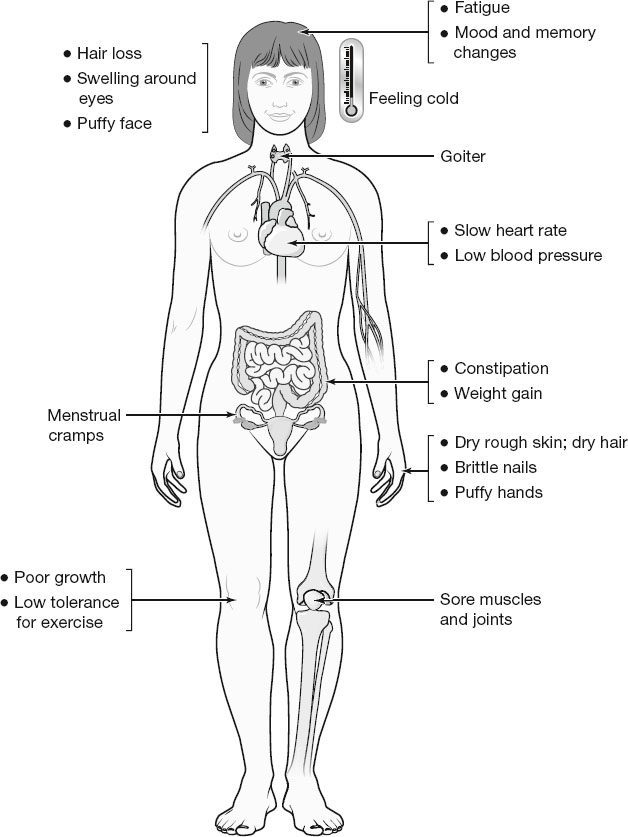
FIGURE 10-3. Hypothyroidism, effects on the body (©Alexʼs Lemonade Stand Foundation, 2025)
A medical illustration of a human body highlighting symptoms of hypothyroidism with labeled text pointing to different body parts. At the head region, symptoms include hair loss, swelling around eyes, puffy face, fatigue, mood and memory changes, and feeling cold (shown with a thermometer). The neck area is labeled goiter. The chest region notes slow heart rate and low blood pressure. The abdominal area lists constipation, weight gain, and menstrual cramps. The arms show dry rough skin, dry hair, brittle nails, and puffy hands. The legs indicate poor growth, low tolerance for exercise, and sore muscles and joints.
These are simple blood tests. At some facilities, radioactive iodine uptake by the thyroid is measured. At every yearly follow-up appointment, a survivor’s thyroid should be palpated (felt by hand) and the linear growth of children and young adolescents should be assessed at each visit. If a healthcare provider can feel a thyroid nodule (bump), an ultrasound of the thyroid will be done to evaluate it. Some institutions now use ultrasound for screening.
Table 10-3 Laboratory tests, findings and treatments for thyroid diseases |
||
|---|---|---|
Condition |
Laboratory findings |
Medical Management |
Compensated hypothyroidism |
High TSH, normal T4 |
Daily thyroxine pill (suppress excessive gland activity |
Primary hypothyroidism |
High TSH, low T4 |
Replacement with thyroxine hormone pill |
Low thyroid-stimulating hormone |
Low TSH, low T4 |
Daily thyroxine pill |
Hyperthyroidism |
Low TSH, high T4 |
Radioactive iodine destroys thyroid gland, daily thyroxine pill |
Thyroid problems can occur years or decades after treatment for cancer, so a yearly check is necessary for the rest of your life. If any abnormalities are detected during an examination, referral and follow-up by an endocrinologist or surgeon are necessary.
Medical management of thyroid problems
Survivors’ healthcare providers should discuss the signs and symptoms of thyroid problems so they can be recognized and treated early. Although thyroid problems are common in survivors who had radiation to the head and neck, treatment is generally easy and effective. Table 10-3 outlines laboratory tests, findings, and treatments for thyroid diseases.
Thyroid nodules. Patients with nodules detected by ultrasound should have a thyroid scan and evaluation by both an endocrinologist and a surgeon. See Chapter 20, Subsequent Malignancies, section on thyroid nodules. If the scan shows nodules, a biopsy should be performed.
Pregnancy. Female survivors who are at risk for thyroid problems and are planning to become pregnant should have a blood test to evaluate thyroid function. Both the American Association of Clinical Endocrinologists and the American College of Endocrinology recommend that all women planning to become pregnant be screened before they conceive, because mothers with thyroid disease have a higher risk of having children with neurological defects.
All survivors planning to become pregnant, should have a blood test to evaluate thyroid function because mothers with thyroid disease have higher risk of having children with neurological defects.
Table of Contents
All Guides- Acknowledgements
- Contributors
- Foreword
- Preface
- 1. Survivorship
- 2. Emotions
- 3. Relationships
- 4. Navigating The System
- 5. Staying Healthy
- 6. Genetic Testing And Childhood Cancer
- 7. Diseases
- 8. Fatigue
- 9. Brain And Nerves
- 10. Hormone-Producing Glands
- 11. Eyes And Ears
- 12. Head And Neck
- 13. Heart And Blood Vessels
- 14. Lungs
- 15. Kidneys, Bladder, And Genitals
- 16. Liver, Stomach, And Intestines
- 17. Immune System
- 18. Muscles And Bones
- 19. Skin, Breasts, And Hair
- 20. Subsequent Malignancies
- About The Editors